
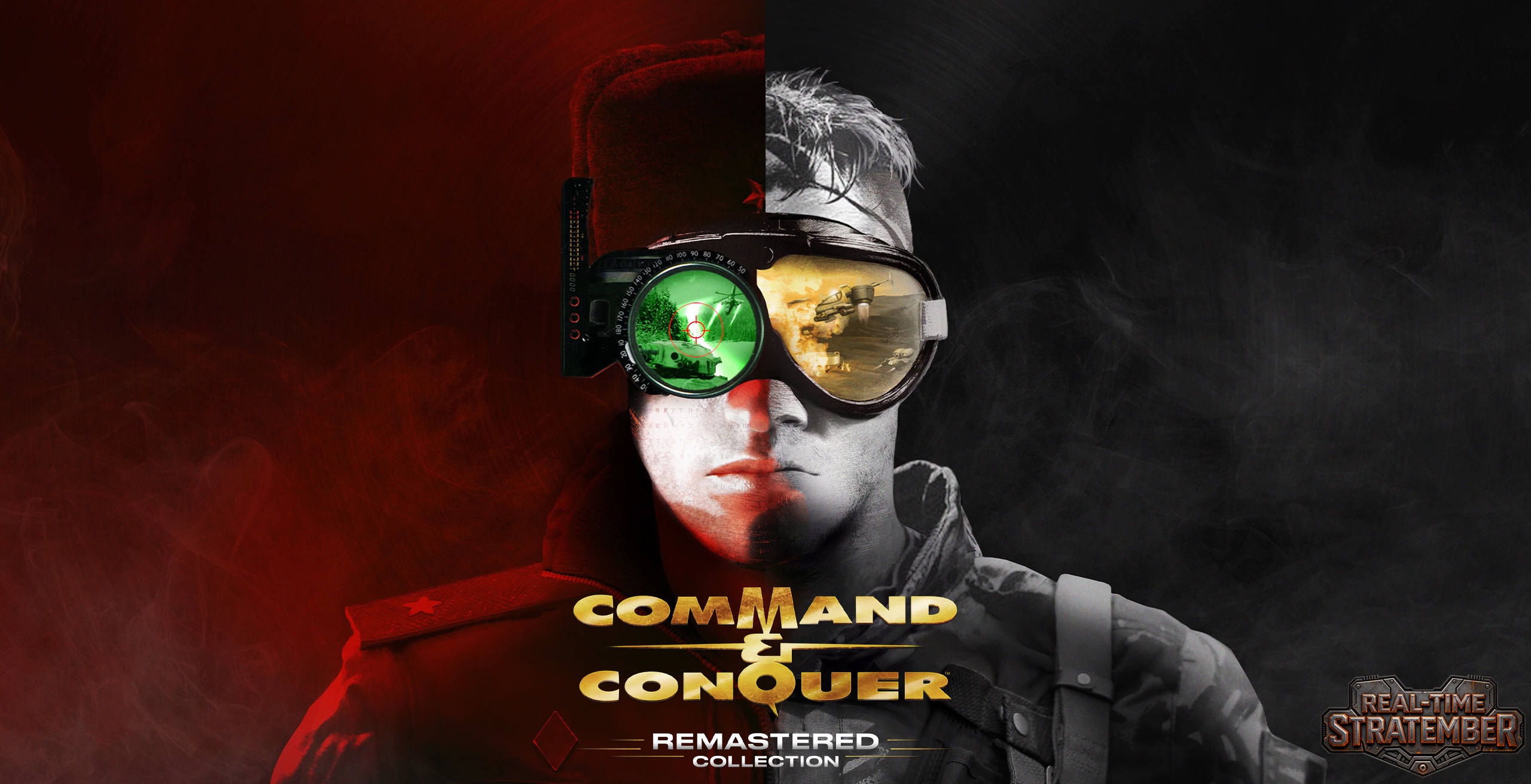
Surely every gamer knows Command and Conquer. Console gamers, PC gamers, new and old. SURELY. If not, FOR SHAME. Command and Conquer is widely considered one of the games that defined and popularised the RTS genre as we know it. We were a little late to the game in our house, we first rented it for the PlayStation from Blockbuster Video (Blockbuster seems to be a recurring theme this month…) and we ended up picking it up on PC during a sale a few years after the initial release. By that point we’d already played the absolute shit out of Command and Conquer: Red Alert so we knew roughly what we were in for. Back then, finding games wasn’t as simple as browsing online and usually meant a physical trip to an electronics store. Harvey Norman, Dick Smith Electronics and even further back in my hometown, Billy Guyatts. The major department stores like Myer or Target also tossed a copy or two of a new PC game on the shelf too. Once we got our hands on it though, we ripped through it HARD. It didn’t end up as popular in our house as Red Alert, but we definitely weren’t complaining with some more of that cheesy B-movie aesthetic. GDI versus NOD feels lower budget than the sequel, but it pays off well and Red Alert’s roots are clearly on show all the way through. It should come as no surprise that I’m playing through the Brotherhood of NOD campaign. How could I pass up the first appearance of Kane? Anyway, let’s dig in.

Command and Conquer was released by Westwood Studios in 1995, with Petroglyph’s remaster coming in 2020. This is a follow up to Dune II, a game which helped establish the blueprint for modern real-time strategy games with distinct factions, mouse-driven controls, base building and resource harvesting. The story is there, but don’t expect anything extraordinary. Set in an alternate 1995, a meteor crashes near the Tiber river in Italy and brings with it an alien substance, which is aptly named Tiberium. A cultic society known as the Brotherhood of Nod through their leader Kane, claim to have foreseen the potential of Tiberium and invests in technology to harvest and refine it to fuel their rapidly growing army worldwide. Nod are engaged in battles across the globe when Kane gives the order to secure territory across Africa. Orders are given to the player, a new recruit for the Brotherhood, through FMV sequences by Kane’s second in command, Seth. Nod’s greatest resistance is the Global Defense Initiative. GDI was initially formed by the UN as a multinational peacekeeping force after World War II under different covert names and has now been repurposed as of 1995 as a worldwide anti-terrorism organisation with the goal of eliminating Nod across the globe and containing the spread of Tiberium. After continued success across Africa taking out GDI targets and securing nuclear missile codes, Kane’s second in charge attempts to send the new recruit on a rogue operation to attack the United States. Kane steps in personally to remove Seth with a bullet to the head. Kane re-establishes Nod’s foothold in Africa, securing the continent and control of GDI’s super weapon, the Ion Cannon. Kane then turns his attention to Europe and the rest of the world.
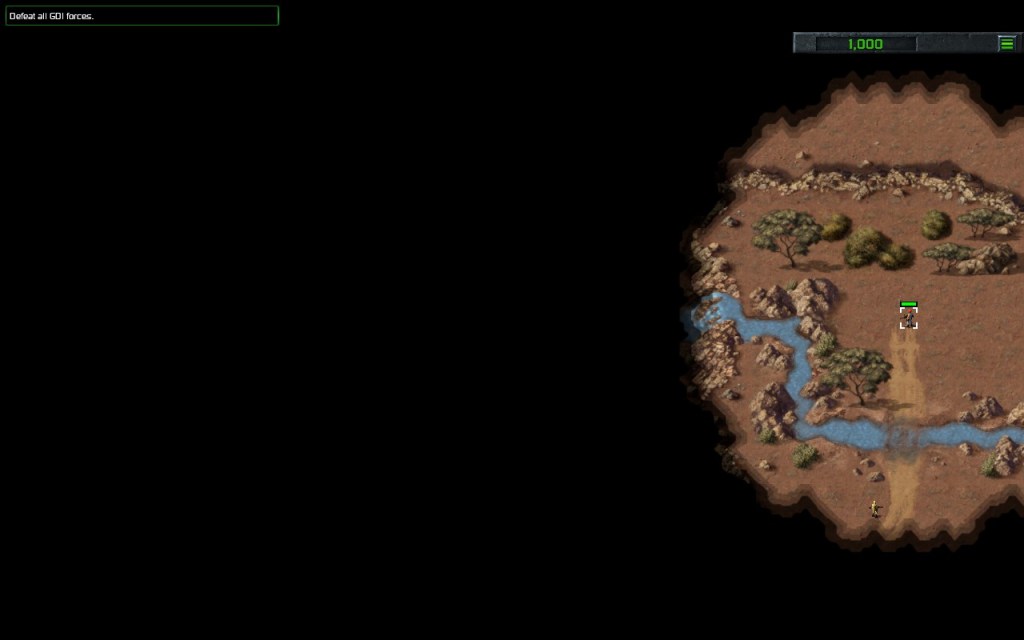
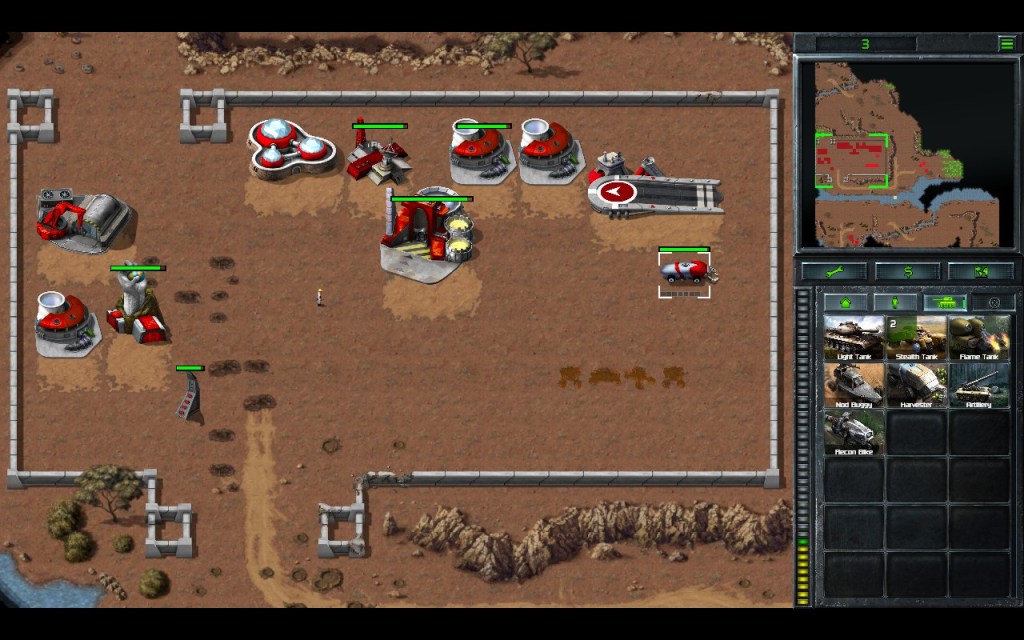
Command and Conquer may appear simple, and it is, but simple is the safe play here. Tiberium is the single resource to be harvested rather than the two, three or four in some other titles this month. It’s also only one of two resources to be managed alongside power. Pacing benefits massively here and you can build extra refineries or harvesters to see your economy explode. The faction asymmetry feels refreshing with GDI clearly the conventional military with heavy armour and brute firepower, while Nod is the underdog relying on cheap, mobile guerrilla-style units built around sabotage and stolen technology. The story plays its part, unlocking new units as you push through the campaign at a solid rate. The Command and Conquer sidebar is truly something else. Westwood went all in with a dedicated build queue which sits neatly down one side of the screen, topped off by the radar. Each individual section unlocks as you build all the way up to super weapons. Everything to manage your base and unit production sits in a clean, dedicated space rather than being buried in menus. It’s simple by design, but damn it’s effective and it’s been used as a blueprint which every RTS since has borrowed from in some form. Stack up a queue of units, select your whole army and you won’t be stuck babysitting individual buildings or units one at a time. It provides a more direct way forward. The game is not without its faults though, pathfinding can feel clunky at times. Bridges in particular show the game’s age more than anything else. Even with some rough edges, Command and Conquer remains a class above.
Command and Conquer is widely considered the game that properly defined the RTS genre as we know it. Dune II laid the early groundwork but it was Command and Conquer, which released just months apart from Blizzard’s Warcraft 2 in 1995, that’s credited with providing the template that the genre would work off for years to come. Red Alert 2 and as much as it pains me to admit, Command and Conquer: Generals owe their entire identity to what Westwood built here. Even Blizzard couldn’t ignore it. StarCraft was originally pitched and presented as little more than Warcraft 2 reskinned in space. It got torn to shreds by both press and fans at E3 1996 and dubbed “Orcs in Space” forcing Blizzard back to the drawing board. As part of their ground up rebuild, they specifically created a dedicated cinematics team to keep up as they knew Command and Conquer’s story presentation had outclassed what Warcraft 2 offered. The FMV cutscenes became iconic in their own right. Joseph Kucan’s performance as Kane is STILL talked about decades on and has appeared in several greatest video game villain of all-time lists. An interesting fact, Kucan holds the Guinness World Record for longest recurring actor in a video game franchise. He even returned to film new material for the 2020 remastered collection. That cheesy B-movie FMV presentation remains a highlight of the series, it’s funny and at times ridiculous, but the story legitimately ties into the gameplay and makes it feel like you’re actually playing through it. For a 1995 release, that’s unreal. The Remastered Collection from Petroglyph, a studio made up of largely former Westwood developers, further cements that legacy and is widely considered one of the best remasters ever made.
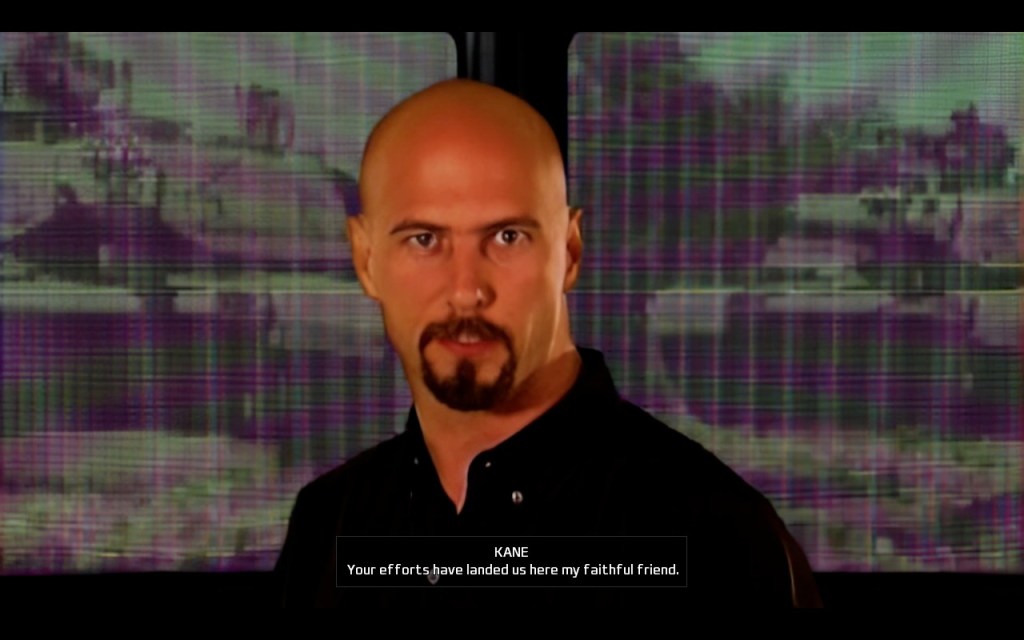
Command and Conquer more than earns its reputation as one of the most important real-time strategy games ever made. Mechanically, it’s not the most complex and with only two resources to manage coupled with a dead simple sidebar, you can see that was exactly the point. Everything in the game is built to keep you constantly moving forward, not backward, upward, not forward and always twirling, twirling, TWIRLING towards freedom. I mean, uh… and not getting bogged down in managing several, assorted menus. GDI and Nod both feel different to play and that in itself is incredibly refreshing for an RTS of this age and the Brotherhood of Nod campaign does a great job of slowly drip feeding you new units to unleash as Kane’s ambitions grow. I can’t finish up without mentioning Frank Klepacki, this is where the series’ reputation for unreal soundtracks started and he was pushing out absolute bangers from the get-go. It can still play rough in places and pathfinding hasn’t aged all that well, bridges will test your patience every time. But for something of this age, without ignoring the remastered enhancements, this is unreal. Command and Conquer’s legacy runs deep and everything that came after is a testament to it: Tiberian Sun, Red Alert with Blizzard feeling the pressure enough to rebuild StarCraft from scratch. Kane himself became one of gaming’s iconic villains and that’s not nothing for a bloke in a leather jacket delivering lines to a camera in 1995. The Remastered Collection strengthens it further, giving an important piece of gaming history the modern upgrade it needs without stripping away what made it great, not to mention the huge fan service. Command and Conquer shouldn’t be a nostalgic curiosity, it’s a game an entire genre owes a debt to.
Verdict:
Command and Conquer isn’t some nostalgic throwback, it’s part of the blueprint the entire real-time strategy genre was built on and it STILL plays that way. Simple but effective mechanics, faction asymmetry and an iconic villain in Kane all hold up incredibly well and it’s backed by an absolute banger soundtrack. It can still play a little rough at times with some clunky pathfinding and bridge-related jank, but this remains essential RTS history. The Remastered Collection just makes it easier than ever to see why.
Deck Compatibility: 10/10
Overall Game Rating: 9/10 – Peace Through Power
Leave a Reply