
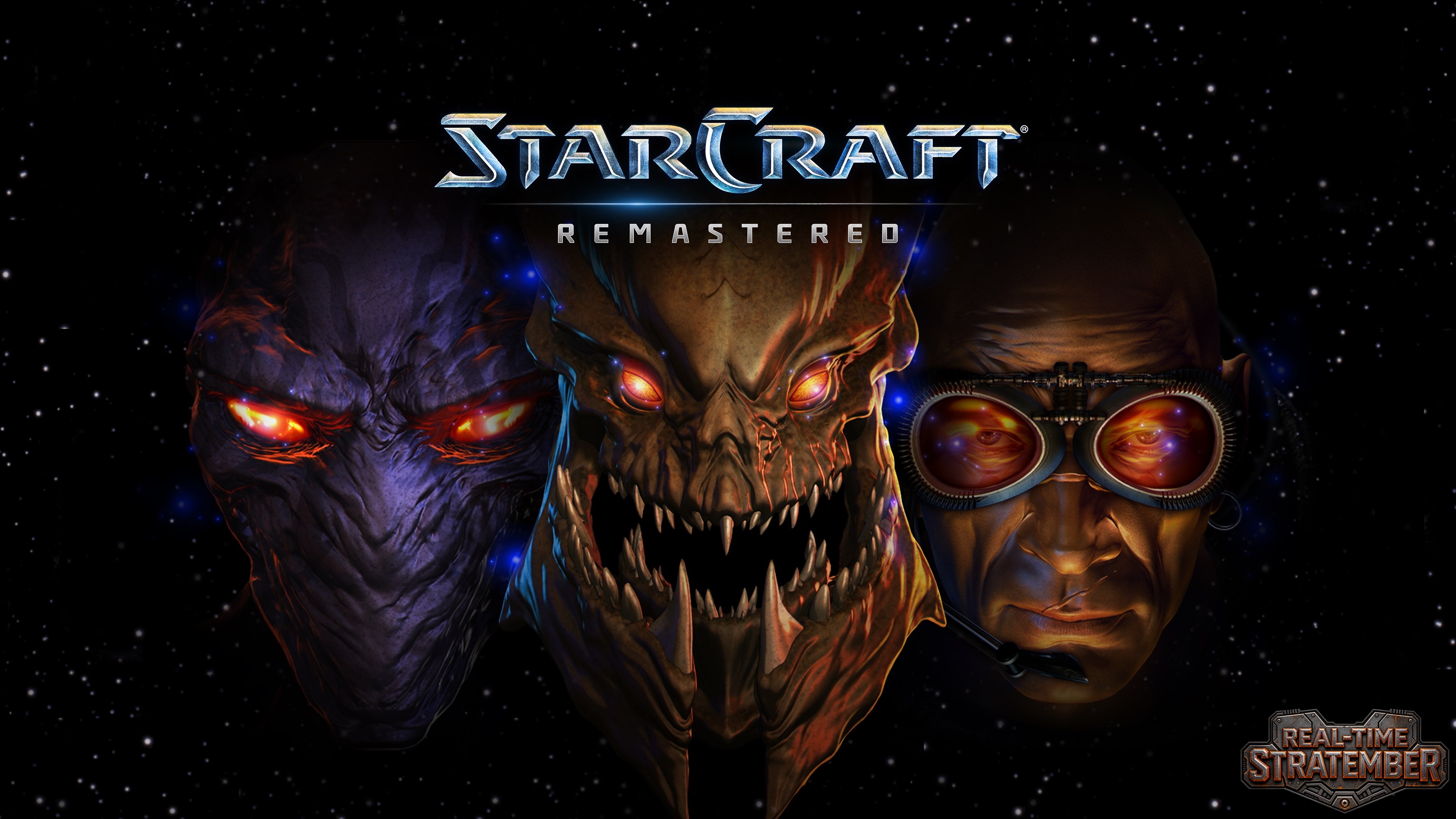
StarCraft was surprisingly never one of the staples growing up in our house. The closest we got to owning it was seeing it on the shelf at BlockBuster Video before they all closed down. You know the one, smaller box with Brood War bundled in for something like twenty bucks. Our neighbour also had StarCraft 64, so I guess that made us StarCraft …adjacent? I think we’d seen enough of the game to know some of the units and recognise the voice lines secondhand, but nowhere near enough to know how to properly conduct a Zerg rush. The first time I actually played it myself was years after release. I think it was included on some demo disc we had around the house. I remember being impressed with what I saw, but for whatever reason we just never pulled the trigger on it like we did with Warcraft 2. For me, it became one of those games I always meant to get around to and just never did. As is tradition. I ended up buying it nearly ten years ago on Battle.Net in anticipation of the Remaster and fully intended to rip right through it. When the Remaster released, I made a couple starts and I was still impressed with what I saw but I never stuck with it long enough to see it through. Real-Time Stratember is the perfect excuse to finally follow through and here we go with the Terran campaign.

StarCraft was released by Blizzard Entertainment in 1998, with the remaster coming in 2017. StarCraft follows three main factions with psionic powers (psychic abilities) that drive the story, which is based in the Koprulu sector of space. The Terran, a young human species with psionic potential. The Protoss, a sapient humanoid species with advanced technologies and psionic mastery. And the Zerg, the terrifying amalgamation of biologically advanced, insect-like aliens capable of evolving by absorbing the essence of other beings. The original campaign kicks off with the Zerg swarming into the Koprulu sector, wiping out a Confederate colony before the rebel group Sons of Korhal start weaponising them against the Confederacy using psi-emitters to draw them to their location. Once the Confederacy inevitably collapses, rebel leader Arcturus Mengsk crowns himself emperor of the new Terran Dominion. The Zerg are hunted by a Protoss fleet led by Tassadar, destroying any infested worlds in their path. With the assistance of the once exiled Dark Templar, they work to sever the Zerg Overmind’s (Leader of the Zerg) control by killing off its cerebrates (intermediate commanders). The Dark Templar alliance backfires when a psychic link to a dying Zerg cerebrate tips the Overmind off to the location of Aiur, the Protoss’ homeworld. The Zerg descend on it, crushing all in their path. The Protoss, still allying with the Dark Templar, team up with the Terran for an eleventh hour strike on the Zerg Overmind.

Where StarCraft manages to separate itself from other RTS games is how the gameplay and mechanics are tied to the story. The story is well presented in pretty slick cutscenes for the time and briefing-room style conversations before each mission. The in-game dialogue works to fill in any gaps the briefing may have missed typically before dropping into a mission or in the closing moments. The story is legitimately engaging, imaginative and pretty easy to buy into. The characters play their roles incredibly well too, you’ll love some and hate others pretty well instantly. Warcraft 2 had some grand ambitions with its story and I think they nailed the pacing, but the gameplay never quite lived up to the story. It’s a sizeable gap, almost feeling like separate entities glued together. StarCraft is where Blizzard really got it right and they manage to close that gap. Missions still escalate as they did in Warcraft 2 and the pacing still feels great, but here it actually feels like you’re playing through the story rather than just hearing about it before and after the fact. Protecting and evacuating a doomed colony under Zerg attack hits a bit differently than the standard build and destroy style. The last stand at New Gettysburg actually feels like it means something because of everything that led up to that moment. Blizzard really nailed it here and it’s clear this was the blueprint for every real-time strategy campaign that followed.

The Terran identity really comes down to how mobile everything feels compared to the Zerg or Protoss. Buildings have the ability to lift off and relocate, you can use this to skip out on an incoming assault or simply cut your losses and move on once you’ve drained all the resources in the area. Siege tanks bring that same flexibility to the battlefield with the ability to drop them into siege mode to become a static, long-range artillery piece that can punish anyone careless enough to approach it in a straight line. Dropships can give you the harassment advantage that just isn’t on the table for the other factions. The Zerg typically lean on cheap, fast regenerating numbers where the Protoss field fewer units but they’re individually more powerful especially with their included personal shields. The Terran, even while being the token human race, manage to set themselves apart through adaptability, repositioning and repairing on the fly rather than having the best tech or the most units. The game difficulty feels pretty fair throughout the campaign. The missions tend to ramp up gradually but you’re always given the tools to match the challenge thrown at you. Pathfinding holds up pretty well here too, a noticeable step up from every other game I’ve played through Real-Time Stratember, but units will still take the occasional scenic route if you’re not watching closely. The unit roster never manages to feel bloated and every Terran unit feels like it earns its keep so you can play to what suits your style rather than wading through options you’ll never touch.

Finally getting around to StarCraft’s Terran campaign after all these years of false starts and neglect turned out to be even more rewarding than I could have hoped for. While Warcraft 2 will always be a nostalgic constant in my real-time strategy memories, there’s a noticeable gap between how grand the story is meant to be and how it plays. StarCraft manages to fill that gap and seamlessly fuses its rich story directly into the gameplay. The Terran campaign is more than just the introductory chapter to this sci-fi conflict. It stands as a masterclass in atmospheric storytelling, tactical versatility and mission design that still sets the standard for the real-time strategy genre even today. From desperate defence to satisfying placement of siege lines and mobile bases, every victory feels rewarding and every story element hits with real impact. The Remaster helps polish some of those rough visual edges without compromising what made the original great. If anything, it proves that the game’s exceptional design truly stands the test of time. It’s taken me nearly a decade to finally see this one through, I realise that it’s only one campaign so don’t bother pointing that out, but Real-Time Stratember provided the perfect excuse to finally check a pretty massive case of backlog regret off the list. StarCraft remains a deadset classic and more than lives up to its legendary reputation.
Verdict:
StarCraft justifies its legendary status by doing something few RTS games manage: fusing a legitimately engaging story directly into the mechanics rather than having one ride the other’s coattails. The Terran’s mobile bases, siege lines and a fairly lean but purposeful unit roster keep every mission feeling distinct as the stakes ramp up. The Remaster’s polish does nothing but sharpen what was already a masterclass in campaign design. StarCraft’s reputation was more than earned.
Deck Compatibility: 9/10
Overall Game Rating: 9.5/10 – Need a light?
Leave a Reply