
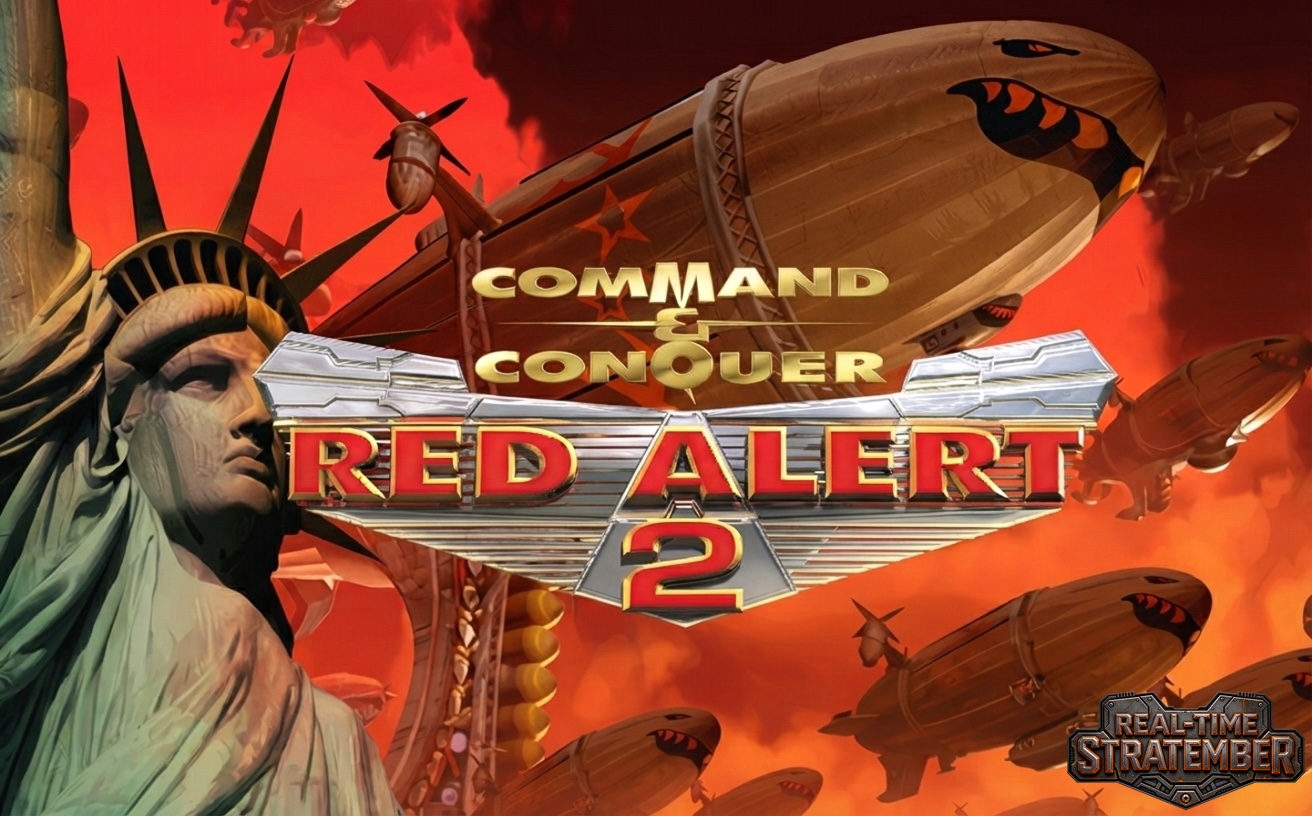
Command and Conquer: Red Alert 2 is one of the best real-time strategy games of all time. There’s really no need for a review here, we all know how that’d go. Instead, this will be more of a retrospective on a deadset classic. Red Alert 2 will also stand as the exception during Real-time Stratember. I went in intending to just rip through the Soviet campaign and I just couldn’t help myself, I had to finish the Allied campaign. If you’ve played Red Alert 2 before, you’ll know. Both are worth your time but if you do only have time for one, absolutely crush through the Soviet campaign… even if it’s only for the Apocalypse tank. Over the years, I’ve put in a hell of a lot of hours into this game. Campaign, original multiplayer, CnCNet, I’ve tried it all… except fan campaign mods, I didn’t make it that far but I definitely won’t rule it out down the track. I remember being sick back in the day and playing mission after mission of Red Alert 2 helped me get through. Going back through the campaigns again really reminded me why I love this genre and why this game in particular is one of the greats.

Red Alert 2 released towards the end of 2000, right in the middle of a time when it felt like the real-time strategy genre couldn’t miss. The Allied and Soviet campaigns have slightly different events, but the underlying story remains the same. It picks up twenty years after the events of the original Red Alert, Stalin is long dead and the Allies have installed Alexander Romanov as the new Soviet leader. Romanov was intended to be used as a puppet by the Allies, keeping relations with Western countries friendly. Romanov with the help of his top advisor Yuri, the head of the Soviet Psychic Corps with his own psychic abilities, managed to rebuild the Soviet military with Yuri using his abilities to mask their efforts and shut down Allied intelligence in the USSR. The Allies were blindsided and with Yuri disabling their warning systems, the Soviets managed to invade the mainland United States from all angles in a surprise attack. The American attempts to launch a retaliation nuclear strike were sabotaged by Yuri’s mind control leaving the nukes to explode in their silos. Within mere hours of the invasion, the United States was completely overrun with Soviet forces.


Red Alert 2 came out during a pretty significant shake up behind the scenes at Westwood. Back in 1998, EA acquired Westwood Studios and its sister studio Burst Studios from Virgin Interactive, which set the stage for everything that followed. Westwood Studios held a mostly consultative role during Red Alert 2’s development with Westwood Pacific (formerly Burst Studios) doing the legwork. Surprisingly, most of the staff had never made a real-time strategy game before. Not bad for a first attempt, eh. The game was built on a heavily modified version of the Tiberian Sun engine, continuing the 2.5D approach with 2D sprites mixed with voxel-based (volumetric pixel) infantry, vehicles and turrets. The tone shifts away from the dark and gritty nature of Tiberian Sun and the original Red Alert. Instead, they went for campy alternate history and brought in established actors like Ray Wise and Barry Corbin for the cutscenes. You can tell the budget was up, the sets all look properly detailed and the FMV sequences still hold up as some of the most memorable in the entire series. At its core, it’s still a Command and Conquer game with familiar resource and power management systems returning essentially unchanged. Fog of war and black shrouding still feature as you move through the map. While both the Allies and Soviets have their own units, the majority of them tend to mirror each other. They’re not straight-up reskins, they have their differences, but the real differences are noticed in the late-game tech upgrades with each side showing off their unique identity and play style.

The classic Command and Conquer isometric style is on show, but Red Alert 2 pushes a more cartoony or comic book art style. The Cold War satire is dialed up to eleven and it really shows in the visuals. Those gritty, fairly muted tones are replaced with vibrant, high contrast palettes that make units and structures really pop against the environment. It’s clearly deliberate, but the Allies get this clean, neon-lit look that nearly reads as optimistic while the Soviets have a brutalist concrete, industrial red with menacing structure design. They used detailed 3D models rendered down into 2D isometric sprites using voxel-modeling with an eight direction rotation, which is a prime reason why infantry, vehicles and turrets animate so smoothly for a game this old. Remaster be damned, this still looks unreal. The alternate history angle gets real weight thanks to iconic real world landmarks being used as interactive set pieces. A decimated New York City with the Statue of Liberty in ruins, France with the Eiffel Tower under Soviet control. Small touches, but it sells the story HARD. Then, there’s the soundtrack. Holy hell, Frank Klepacki’s soundtracks never fail to hold up. The long time Command and Conquer composer came back with sixteen tracks that are all bangers. Aggressive guitar riffs, thick and juicy synth basslines and military-style percussion perfectly match that Cold War, sci-fi tone. It blends industrial rock, techno and funk into one cohesive sound and it’s honestly STILL unreal. Twenty six years later, I’m still tempted to throw the soundtrack on just for the hell of it.

Red Alert 2 holds up as one of the best real-time strategy games ever made and that’s hard to dispute. It has a near-perfect balance between fast-paced action and strategic depth, where a lot of other RTS games seem to lean one way or the other. The gameplay helps to tie in the over-the-top story and that’s probably why it works so well. Each mission opens with an FMV briefing which sets the stakes and usually involves knocking out a specific target on the map which pushes the cinematic plot forward. It makes you feel like a participant in this cheesy B-movie rather than just an on-looker between levels. As the story escalates, the gameplay and tech options ramp up to match. From heavily armoured tanks, all the way up to doomsday weapons like the Weather Control Device and Nuclear Missile Silo. It’s unsurprising that on release, reviews were overwhelmingly positive and that reception has held steady. Its influence runs deep and it helped define what players come to expect from the genre. You can clearly trace that influence to later Command and Conquer games and even lesser known titles like Act of War or the newer Tempest Rising. Red Alert 2 is a massive reason why the genre managed to stick around as long as it did. Fans clearly haven’t let go either with CnCNet keeping multiplayer alive on modern hardware and the modding community is still pumping out content over twenty six years later. Remaster calls pop up frequently and I get it, I’d buy it in a heartbeat if EA ever made it happen.

Twenty six years on, Red Alert 2 still earns every bit of its reputation. For a studio who’d never made a real-time strategy game before, Westwood Pacific managed to deliver one of the most complete packages the genre has ever seen. Yeah, they were under the watchful eye of the big dogs at Westwood, but still this was no small feat. I know I’ve said it already, but the visuals STILL pop and the question of a remaster doesn’t come down to ‘when?‘ and more ‘why?‘ Those voxel-based animations still look great and Frank Klepacki’s soundtrack remains one of the best the genre has ever produced. I don’t think any of it would matter if the game underneath wasn’t as strong, but it is. The mission design, ridiculous B-movie plot and matching, escalating tech tree all perfectly work together and playing both campaigns back to back reinforced just how well all the pieces fit together. The art, sound, mechanics and story are all still just as good, if not better than I remember and it’s rare for a game of this age to hold up so well on every detail without at least one of them majorly showing its age. If you’re chasing nostalgia or discovering Red Alert 2 for the first time, or just want to see one of the finest examples of real-time strategy at its peak then this is as close to essential as the genre gets. Honestly, I don’t think I could have started Real-Time Stratember any other way.
Leave a Reply