
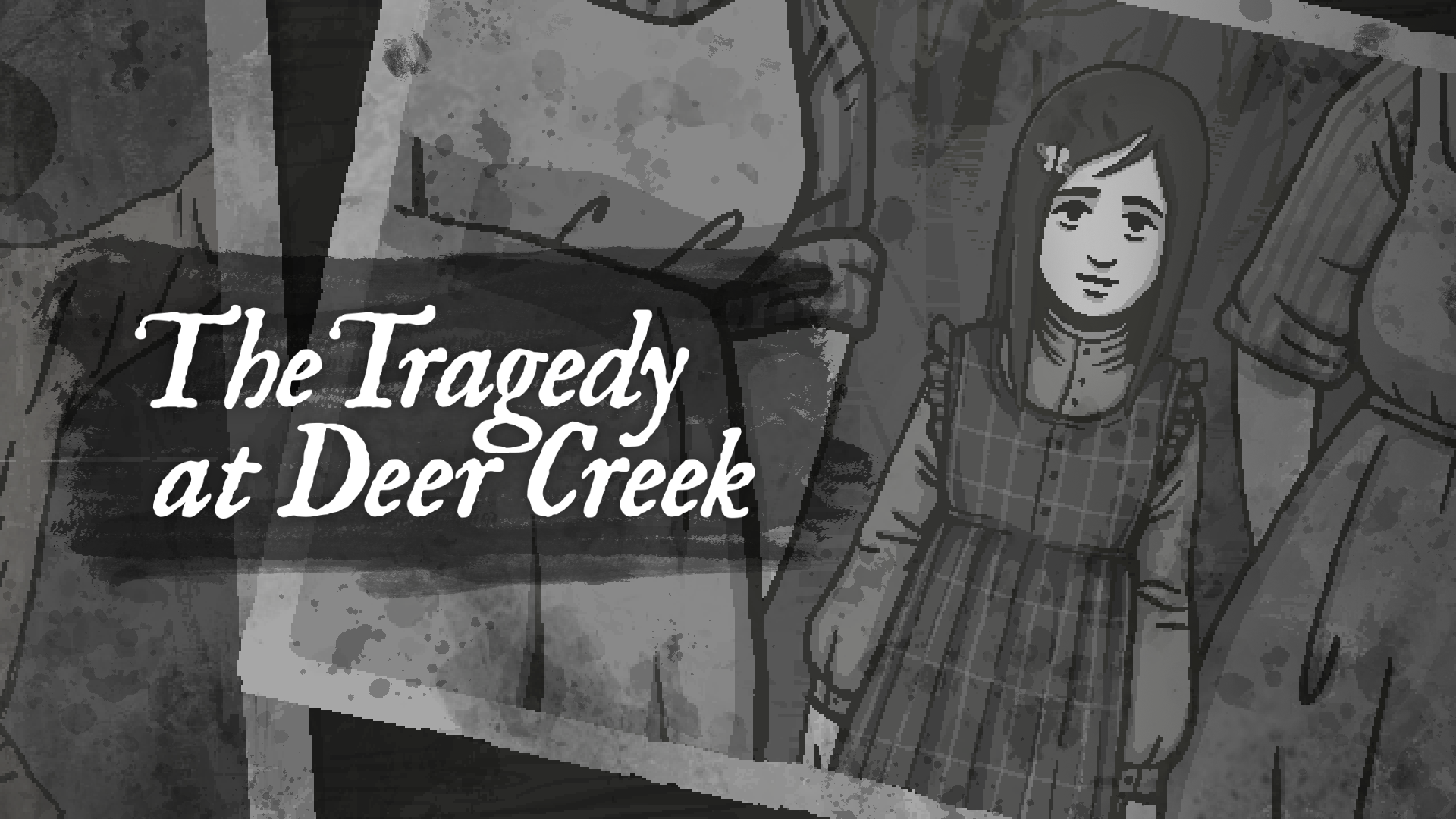
I actually had no idea The Tragedy at Deer Creek was in development. I consider myself a point and click fan, so I probably ought to lift my game. Full disclosure: the team at Sparrowland reached out and provided me a copy of the game to review. All opinions are my own and as always, nobody has paid me to say nice things about them. I’m typically not big on first-person adventure games and the blame can probably be put squarely on the FMV obsession of the early-to-mid ’90s. After the golden era of point and click adventure games which produced some of the greatest video games ever made, the industry responded by flooding the market with cheesy FMV titles full of B-list actors and an awful lot of very expensive nothing. It was definitely… uh, a choice. But it’s 2026 and what better time to put old grudges to bed than a first-person adventure game that actually looks the part. The Tragedy at Deer Creek definitely caught my eye with its retro cel-shaded pixel art graphics, interesting story and eerie atmosphere. It was more than intriguing enough to put my FMV frustrations of the ’90s aside and give it a proper go.

The Tragedy at Deer Creek was released by Sparrowland in 2026. It’s a cinematic, atmospheric, story-driven point and click adventure game. You play as Charlotte Gray, a photographer who is working to complete her project ‘Forgotten Frontiers’ which is aimed at documenting abandoned destinations which time has slowly, uh… forgotten. Set in the harsh winter of 1997, Charlotte’s next project is Deer Creek which is a derelict logging camp buried deep in the Alaskan wilderness. Finding herself miles away from civilisation with nothing but snow and silence for company, Charlotte expects to find little more than the usual worn, beaten relics of forgotten labour. What she actually finds is something far more mysterious and a place that feels less like a ruin and more like a relic, as though time itself had simply stopped. Isolation isn’t just a backdrop here, it becomes part of the mystery and helps drive the atmosphere. As Charlotte explores Deer Creek, she slowly pieces together fragments of the lives of the people who once called it home. Their relationships, their loyalties, their secrets. Beneath the Alaskan snow, the tragedy that refuses to stay buried begins to surface.

Outside of that first-person perspective, The Tragedy at Deer Creek feels right at home among the point and click adventures of old. The first-person view helps to put an emphasis on investigation and allows you to focus on each area thoroughly. It gives each room a clear sense of purpose rather than being just another space to click through en route to the next puzzle. The inventory system also carries that same sense of discovery. The examine function lets you inspect each item thoroughly, which feels pretty intuitive and fits the tone of the game perfectly. You’re a photographer piecing together a mystery, after all. The one niggle that stuck with me is the ‘combine’ function inside the inventory. It honestly works pretty well, I just would have preferred being able to select an item and combine it with another directly rather than engaging another function. I got caught more than a few times trying to work through an inventory puzzle and exiting the inventory altogether. I’ll concede, that could just be my ’90s adventure game brain. The puzzles are generally very accessible, which suits a story-driven game well. The more advanced puzzles deliver something I wasn’t quite expecting: the old school “a-ha! I got it!” feeling that’s been largely absent from the genre for a long time. I did go in the old-fashioned way, no walkthrough, so that may have sharpened the experience a touch. If you’re willing to be patient and look carefully, the game will reward you for it.

Sparrowland have delivered something genuinely impressive with the presentation. The cel-shaded pixel art style sits in an interesting middle ground. It’s modern enough to feel purposeful, but retro enough to scratch that nostalgic itch without feeling like some kind of cheap throwback. It’s a distinctive look that suits the tone of the game perfectly and helps The Tragedy at Deer Creek establish its own visual identity. The soundtrack is worth talking about for what it doesn’t do, as much as what it does do. It’s subtle and deliberately so. There were moments where I barely noticed it was there at all, which I think is a huge positive. When a soundtrack fits seamlessly, it stops being something you listen to and starts becoming something you feel and I think that’s the job being done right. It quietly underscores the atmosphere without getting in the way of it. Voice acting is great too, it avoids that stiff as a board or chalky delivery that drags a lot of games in this genre down. There’s also a nice touch where examining something multiple times yields a slightly different tone rather than the same, flat repetition. Small detail, but it goes a long way to keeping you immersed. The setting carries the immersion further. The isolated, derelict logging camp buried under an Alaskan winter does something that the best adventure game environments do: it stops feeling like a backdrop and starts feeling like its own character. There’s a persistent sense of being alone and occasionally something a little more unsettling. That creepy notion that alone might not be entirely accurate.

The story is on the shorter side, but that actually plays in its favour. There’s no filler or fluff here, no unnecessary story padding to extend the runtime. Sparrowland had a very specific narrative they wanted to deliver and they managed to wrap it up neatly. That’s harder to pull off than it sounds. What starts as just another documentation project slowly reveals itself as something considerably darker and more sinister, evolving with each section solved and each fragment uncovered. There’s an eerie thread of the supernatural running through it, guiding the way with genuine moments of suspense and intrigue that keep pushing you forward. The framing works particularly well to drive this home. Experiencing the story through Charlotte’s eyes as she pieces it all together for a personal project adds a layer of authenticity, even as the plot gets darker. You’re not just some player solving puzzles, you’re a photographer slowly working to uncover a history that was probably meant to stay buried. This adds a real sense of weight. The mystery and tattered history are genuinely interesting and engaging throughout, which in a story-driven game is the most important box to tick. When it all comes together, solving the mystery feels genuinely rewarding rather than inevitable. That’s the mark of a well-constructed story.

The Tragedy at Deer Creek is a focused, confident debut adventure from Sparrowland that really earns its place among the classics that inspired it. They’ve delivered a complete story without unnecessary padding that never really overreaches. It offers a genuinely compelling mystery wrapped in a distinctive visual style with an atmosphere that can work its way under your skin and a story that earns its ending. My only real niggle is the combine function, but the gameplay otherwise feels faithful to what inspired it while finding its own footing in a first-person format. The cel-shaded pixel art, the understated soundtrack and the sheer weight of isolation all work together in a way that feels deliberate and cohesive rather than a collection of decent individual parts. Charlotte’s investigation is absolutely worth following to its conclusion and the fact that it left me wanting just that little bit more is probably as big of a compliment as I can give. If you’re a point and click adventure fan who has been waiting for something that recaptures the feeling of the classics without being a nostalgia cash grab, The Tragedy at Deer Creek is well worth your time. The harsh 1997 Alaskan wilderness is waiting and it might have a few things to show you.
Verdict:
The Tragedy at Deer Creek is a well crafted, atmospheric mystery that recaptures the best of classic point and click adventure gaming without having to rely on nostalgia as driving factor. The presentation is distinctive, the story wraps up well and the isolation of Deer Creek itself lingers even after the credits roll. This is a confident debut from Sparrowland and one I can happily recommend.
Deck Compatibility: 10/10
Overall Game Rating: 9.5/10 – A Chilling Mystery
Leave a Reply