
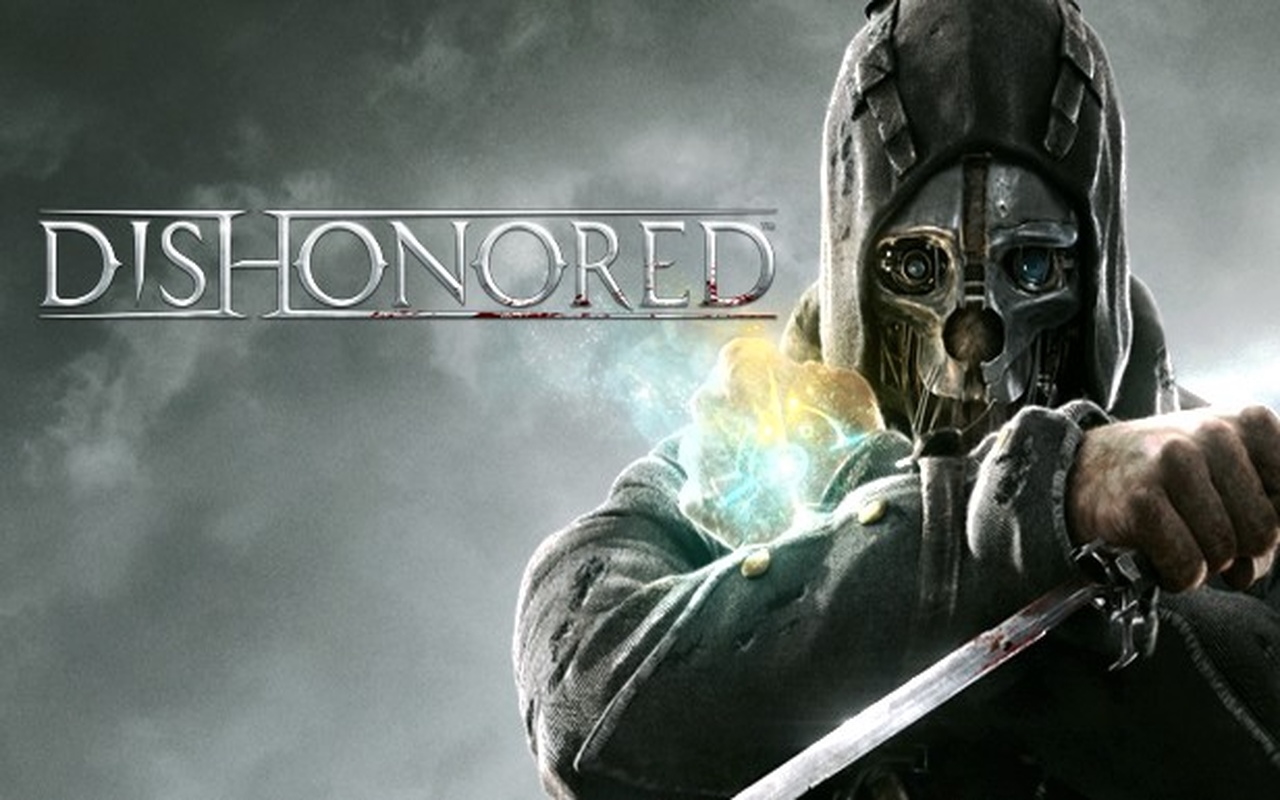
I’m not sure I would have landed on Dishonored by myself. After the disappointment of TMNT: Splintered Fate, I found myself in a bit of a gaming funk. I cycled through a few games, making a start but never feeling compelled to push on. In what felt like a small moment of personal growth, I finally pushed further into Bioshock than I ever have before. The problem is: Bioshock stinks. Sorry to the Bioshock fans out there, but after what was probably my twelfth attempt I surprisingly couldn’t get into it. What ever could I do? Whinge to a couple of friends in a group chat, obviously. One of them recommended Dishonored. I’m certain he’s recommended it before and I went on to play something completely different. But, this time? I locked that suggestion in and fired it up. Hats off to you, BK! This is a genuine banger with a surprisingly stacked cast. Susan Sarandon, Brad Dourif, Carrie Fisher, John Slattery and Michael Fucking Madsen among them. It’s the kind of lineup that makes you do a double-take as the credits roll. Great recommendation.

Dishonored is an action-stealth game released by Arkane Studios in 2012. The story follows Corvo Attano, bodyguard to the Empress of Dunwall. Corvo is returning from an aid-seeking voyage as Dunwall continues to be ravaged by a deadly rat plague. Shortly after reuniting with the Empress, they’re ambushed by a group of teleporting assassins who murder the Empress and abduct her daughter, Emily. The blame is quickly pinned on Corvo by the Empress’ Spymaster and he’s sentenced to face execution. With assistance from a loyalist resistance, Corvo manages to escape and joins them at the Hounds Pit Pub. Resting here, he is visited by a mysterious figure known only as The Outsider, who brands him with his mark and grants him supernatural abilities. Corvo sets out to dismantle the conspiracy against him and track down those responsible. What follows is best experienced blind. The ultimate fate of Dunwall is in the player’s hands, shaped by how violently you approach your playthrough. My only real complaint with the story is that it’s a little too predictable.

There’s a lot of mechanics to work with, maybe even too many. If you’ve read my reviews before, you’ll know I’m not a fan of shoehorning mechanics in for the sake of it. Dishonored actually does a fantastic job of incorporating a wide range of mechanics and one of the best things about how they’re included is that they’re all optional. They’re definitely there, waiting to be unlocked, but they aren’t forcibly shoved down your throat. Hell, even stealth is optional. The game is arguably more enjoyable utilising stealth, skills and powers as it provides a wider variety of ways to tackle a mission. The freedom of choice is ultimately left up to the player and that’s incredibly refreshing. Skills and powers are unlocked and upgraded by collecting runes scattered throughout the world. You can roll in guns (or crossbows) blazing, or you can stealthily work your way through each area. Freedom of choice is great, but honestly Dishonored ultimately feels built for stealth and you can feel that in how each area is crafted. There’s so much opportunity to keep yourself hidden, or lure your enemies to a quick end by the tip of your blade. However you choose to approach the game, the satisfaction you feel when you build a comprehensive set of skills that work perfectly together is incredibly satisfying.

Dishonored is set in the fictional, technologically advanced city of Dunwall in the year 1837, with its design modeled on late 19th to early 20th century London and Edinburgh. The result is this dark, oppressive steampunk metropolis built around the whaling industry, where whale oil powers virtually everything from city infrastructure to weaponry. Dunwall is being ravaged by a rat plague that devestates the poor, while the rich isolate themselves and the regime in charge exploits the crisis to justify its authoritarian grip on the city. Arkane’s design team drew inspiration from various Victorian era and earlier artists, along with their own field trips to London and Edinburgh to specifically photograph side streets and alleyways. They deliberately avoided busier areas to capture that grittier, more constrained perspective which suits the game’s world. That atmosphere is reinforced by distinct enemy designs like the Tallboys which are heavily armored officers on towering mechanical legs who patrol above the chaos, safe from the threat of infection. The music consists of violin-heavy ambient sound, specifically designed to make you feel uneasy. Composer Daniel Licht described it as an evil fog hanging over the world and that pretty much nails it.

Something that might be overlooked in Dishonored is that the game doesn’t judge you for how you play. There’s no morality meter chiming in to call you a piece of shit for leaving a trail of bodies across Dunwall. Instead, the game keeps track of your wrongdoings through a chaos system that quietly shapes the world you’re living in. If you charge in weapons free, you’ll notice more rats in the streets, more plague-ridden citizens shambling through alleyways and NPCs who were once allies refusing to support you or turning on you entirely. If you take the stealthier approach and play with restraint, the city will feel like it’s holding its breath, waiting for someone to step in and save it. Both approaches are valid and the game is built to support whatever you choose. Stealth will lead to a longer runtime but it’ll conserve resources, while taking an aggressive approach will burn through health and mana quickly. What really matters is that your choices add up and when you reach the end, Dunwall’s fate will reflect how you’ve approached the game. Play your role cleanly and a golden age will follow. Slice and dice your way through and the plague might just win. It’s a system that makes the game genuinely replayable, rather than feeling like another coat of paint. It’s one of the smarter ways Dishonored earns its place.

Dishonored is the kind of game that’ll make you feel a little annoyed at yourself for sleeping on it. The setting is rock-solid and it’s as beautiful as it is bleak. For a 2012 stealth-action game, the cast is absurdly stacked. The chaos system provides meaningful weight that a lot of games in this space simply don’t bother with. The game mechanics could have easily been a cluttered mess that were forcibly rammed down your throat, but somehow every power and skill manages to find its place and the freedom to approach each mission however you like never stops feeling earned. If there’s one knock on Dishonored, it’s the story. Any seasoned gamer will probably pick up where it’s headed well before it gets there, but that doesn’t take away from the experience and the ride is still well worth it. Predictable story aside, Dishonored absolutely rewards patience and creativity. If you fully buy into the stealth mechanics and powers, you’re in for a genuinely great time. But more than anything, it’s a game that respects you enough to let you approach it your own way and then holds you accountable for it. That’s a lot rarer than it should be. If you’ve been overlooking Dishonored for whatever reason: do yourself a favour and, uh… don’t. Better late than never.
Verdict:
Dishonored delivers a bleak but beautiful world populated by an absurdly stacked cast. The chaos system ties it all together, subtly changing Dunwall depending on your play style. The mechanics are well crafted and abundant without feeling overwhelming and the freedom to approach each mission your own way never stops feeling earned. The story is a touch predictable, but Dishonored is close to flawless.
Deck Compatibility: 10/10
Overall Game Rating: 9.5/10 – Arkane Nailed It


Leave a Reply