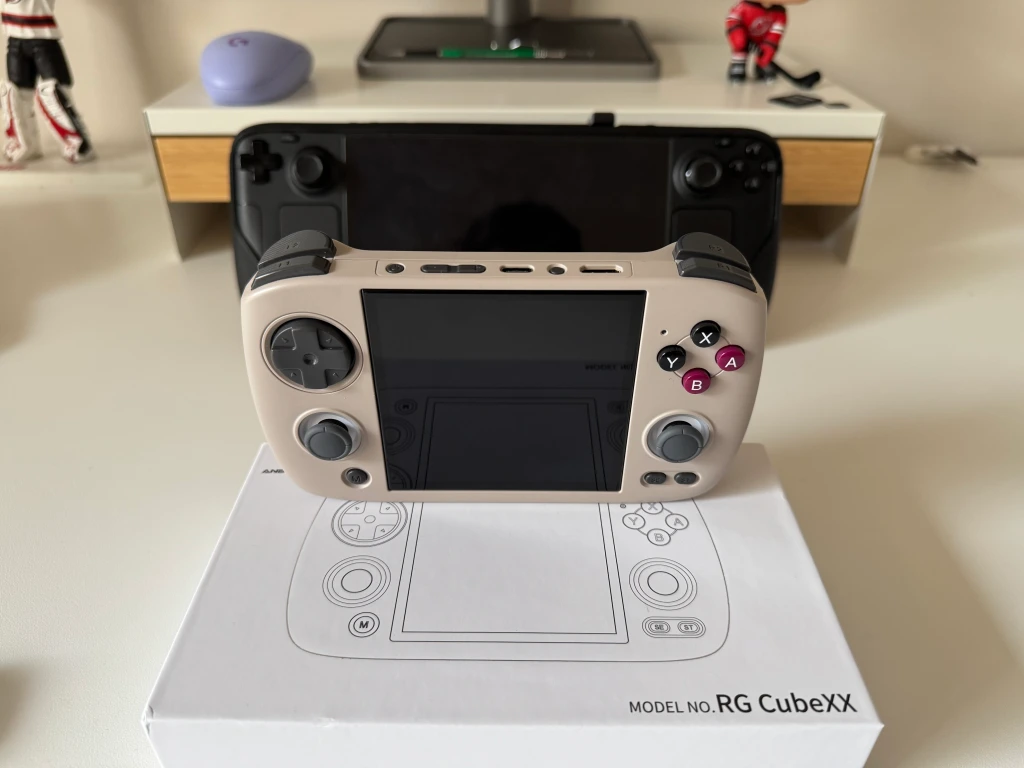
So I guess Dad with a Deck reviews retro handhelds now. You hear that, various handheld manufacturers? Enquire within. I will happily take and review all of your devices. Seriously, send them over. Anyway, so I was deep into yet another season of NHL ‘96 on my Steam Deck and it hit me: maybe I was overdoing it a little for what I was playing. The Steam Deck is one of my favourite devices of all-time, it’s even powerful enough to run some recent AAA titles. Firing up a much older, 16-bit hockey game that particular day kinda made me feel like I was using too much horsepower for the job. While it is comforting to know that I can dive into lower-end emulation and the Steam Deck is barely going to bat an eye, maybe I just don’t need that kind of power all the time. Could something smaller, simpler with less power that is built entirely for older retro systems complement my overall gaming experience? This is when my deep-dive into retro handheld research began.
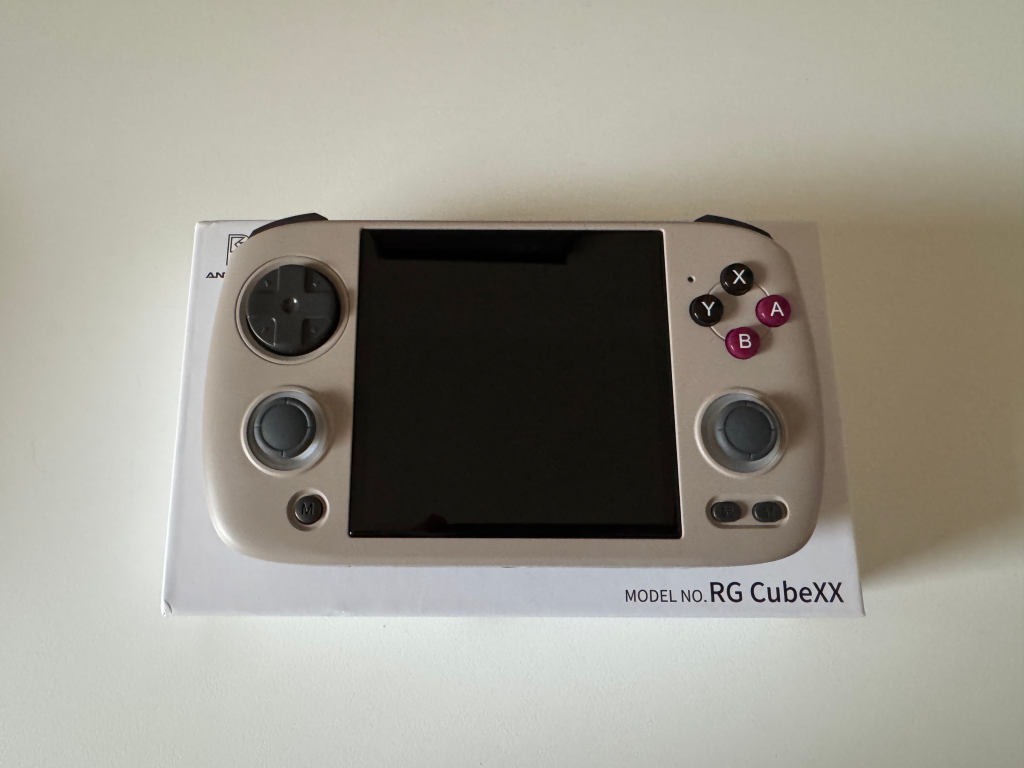
I’ve loosely kept tabs on the retro handheld scene for a while now. I used to own an Ayn Odin Pro and I just never left the various handheld subreddits, so I’ve mostly kept up to date with the mid and higher-end devices. Until recently, I only knew a bit about the lower-end. The lower end is made up of devices from Anbernic, Trimui and Powkiddy along with a bunch of other brands you’ve probably never heard of. After briefly fixating on the Powkiddy X55, it seemed Anbernic’s XX line was the safe bet for the systems I was interested in. But which one? Anbernic pumped out what is basically the same device in multiple form factors with naming conventions that are pretty confusing for a newcomer to the lower-end handheld game. I decided I wanted something with a four-inch screen. Anything smaller just isn’t going to do my already poor eyesight any favours. That alone narrowed it down and when looking at Anbernic’s four-inch offerings it was the RG CubeXX that stood out. Its features looked solid, the 1:1 ratio square 720×720 screen was intriguing, the ergonomics appeared better than others in the line and having Wi-Fi and Bluetooth built in was a bonus. Plus, I liked that it runs a Linux-based OS that I can swap out if I want. With all that in mind, the CubeXX felt like the right pick to me. The real test, of course, came when it finally landed on my desk.
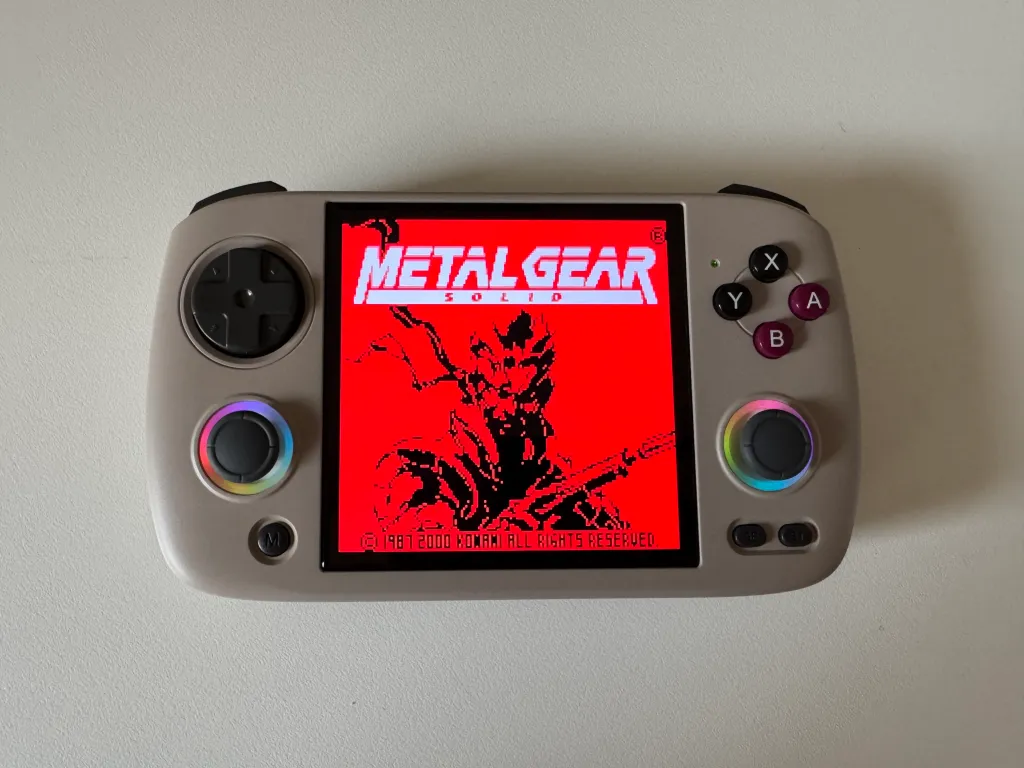
Research is great and all, but nothing beats actually powering the thing on for the first time. I received my Anbernic RG CubeXX about a week or so ago and I’ve had a pretty fun time setting it up and tweaking it to my liking. The general consensus with these devices is that the included SD card will fail at some point. So, in preparation I grabbed a couple SanDisk micro-SD cards from Amazon, one 32GB for the OS and a 128GB for games. This way if my OS card dies, my games library stays in-tact. The stock Anbernic OS actually seems fine enough if you just want to slap on some games and play, but being Linux-based you’ve got some options. Luckily, Russ at Retro Game Corps has already done the legwork with a great guide for the Anbernic XX line, breaking down the pros and cons of each available OS. I went with Knulli which is a fork of Batocera, an established open-source retro gaming operating system. Knulli uses EmulationStation as a front-end, something I’m already familiar with from my Steam Deck. Quick-resume also functions much the same as the Deck. With the setup out of the way, it’s time to dive into buttons, sticks and everything else you get your mitts on.
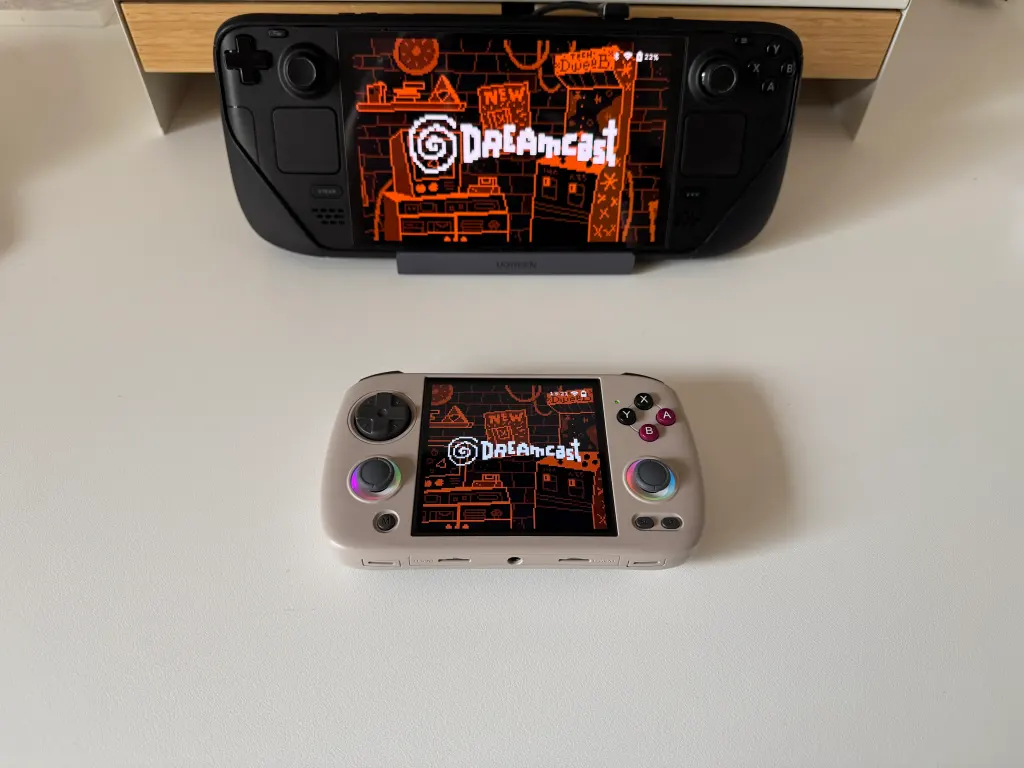
I’ve never done a retro handheld review before, so let’s see how this goes. The Anbernic RG CubeXX feels nice in the hand thanks to its ergonomic bumps and curves. Despite being fairly small, it’s never felt cramped. The 1:1 ratio screen looks fantastic at a crisp 720×720 resolution. The ABXY face buttons are small but well proportioned, with just enough travel to feel satisfying. The triggers are much the same, L2/R2 are digital and they’re actually pretty quiet all things considered. The floating Mega Drive-style d-pad is another highlight and as a Sega kid this just feels right to me. As other reviewers have noted, its range of motion makes it absolutely hadouken-able. One thing I didn’t see mentioned anywhere is the size of the d-pad. It’s hard to judge from videos or photos and before unboxing I expected something closer to a full-sized Sega Mega Drive d-pad. Instead, it’s roughly a third to half the size and a more rigid. That said, it’s a solid floating style d-pad that works well in all directions. The Nintendo Switch-style sticks are exactly what you’d expect, they’re pretty standard across these handhelds. The RGB light rings around the sticks won’t be for everyone, but my daughter enjoys the rainbow effect so I’ve left them on for her amusement (maybe mine too… just a little). Below the left stick is a menu button which ties in with your emulation hot keys, while your usual start and select buttons sit neatly under the right stick. For a small device, the CubeXX feels solid. It’s not exactly premium but it doesn’t feel cheap either, which is perfectly fine for this price-point. How it looks and feels is a reminder that these handhelds are really just fun toys for adults. They’re the kind of thing we convince ourselves are practical. ….until it’s 2am and we’re still glued to it.
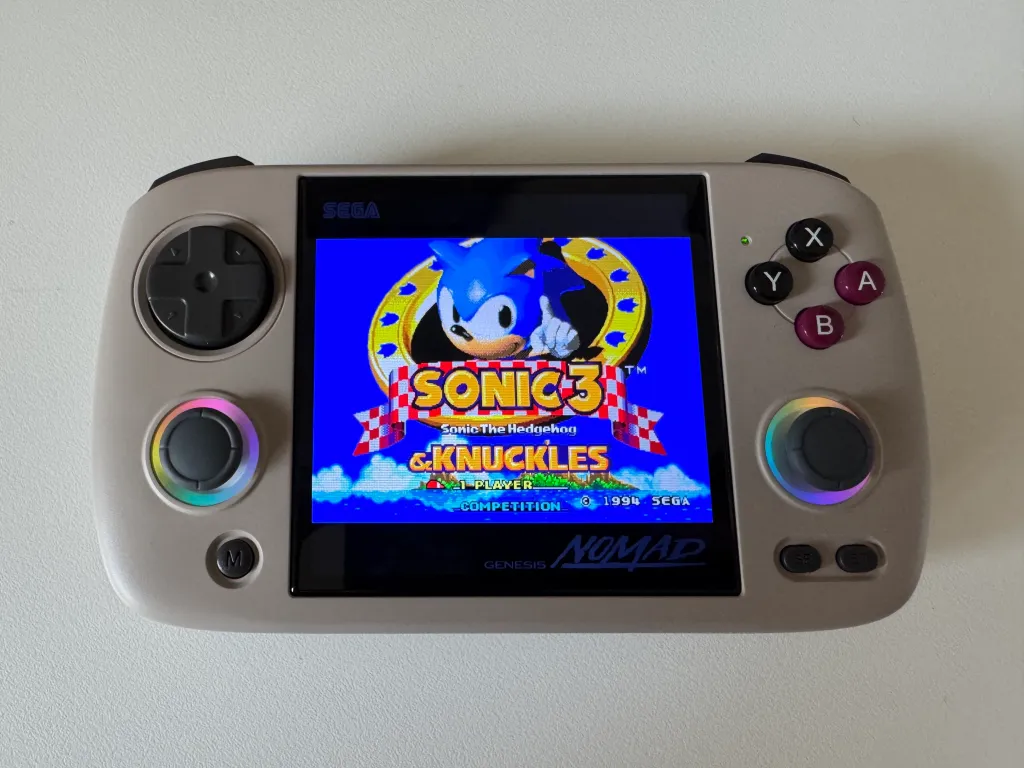
The Anbernic RG CubeXX runs on an H700 quad-core ARM Cortex-A53 CPU, a Mali G31 MP2 GPU and 1GB of LPDDR4 RAM. All that might sound fancy. In practice, it means the CubeXX will comfortably handle everything up to the original PlayStation, plus a decent chunk of Nintendo 64 and Dreamcast. Some PSP games will run, but this really isn’t a PSP device as the image ends up cramped with big black bars. The RG CubeXX features a gorgeous 3.95-inch IPS display with a crisp 720×720 square resolution. Squares are cool. Systems like the Game Boy, Game Boy Colour and Pico-8 look absolutely perfect here. NES, SNES, Mega Drive, arcade and even DOS games shine too, with PlayStation and Dreamcast looking equally as sharp. Nintendo DS is also possible with either stacked screens or by toggling which screen takes focus while using a stick to take care of any touch inputs. It works fairly well, though it does feel a little squishy. I’ve really been enjoying Game Boy Advance, with the right overlay it feels just like I’m playing on my old Arctic White one. If overlays and shaders are your thing, Retro Game Corps also has a great guide on this for retro handhelds which includes correct aspect ratios and setup tips. Russ lays it all out better than I could. I was a little unsure about the square screen when I placed my order. But after a week or so in the world of cube with the SNES, Mega Drive and GBA libraries, I’m sold. It’s been a great complementary device to my Steam Deck OLED.
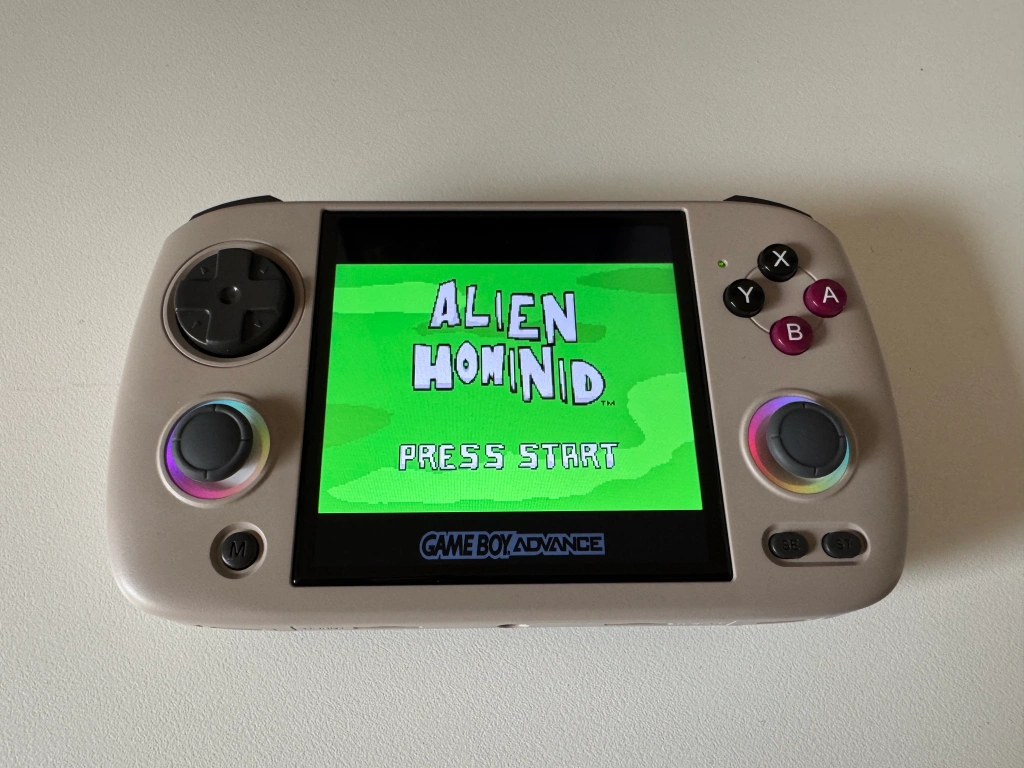
I’m quite surprised how the RG CubeXX has slotted into my limited gaming time. It’s definitely not the most powerful handheld around and it’s absolutely not going to replace my Steam Deck OLED. But, that’s kind of the point. It’s small, it’s quirky, it’s comfortable and allows me to focus on the lower-end retro systems. It’s surprisingly pocketable depending on what I’m wearing. If you are planning on shoving it in your pocket, I’d recommend a larger hoodie. But I can rip this thing out of my pocket and resume whatever retro system I’ve been playing without feeling like I’ve over-committed on resources. The square screen is thoroughly enjoyable and gives Game Boy games of all eras and other pixel art systems a razor-sharp display to shine. It’s not a premium device and it doesn’t pretend to be, but that’s exactly what makes it great. The CubeXX feels exactly like the playful sidekick to my Steam Deck OLED. It delivers exactly what I wanted: a smaller handheld I can lose hours in without the need for the horsepower of a portable PC. The Deck is the workhorse, but the Anbernic RG CubeXX has fast become the pocket-sized mischief-maker that I can’t put down.






 Dad with a Deck
Leave a comment