
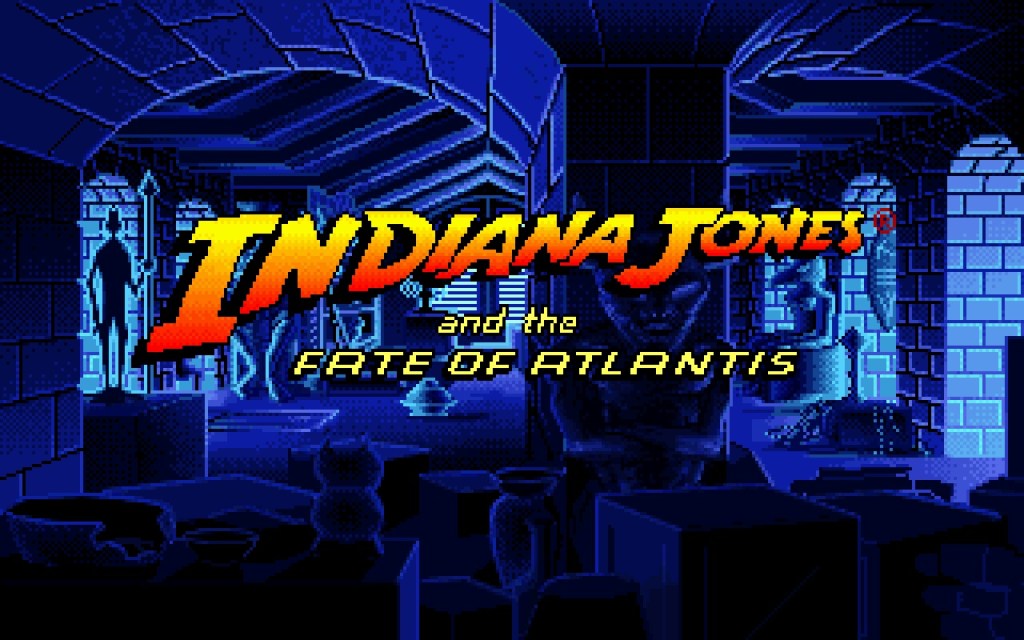
Let me preface this by saying Indiana Jones and the Fate of Atlantis is one of my favourite adventure games of all time. Honestly, it would even make it into the list for one of my favourite video games of all time. It comfortably sits at the top of my own personal top 10 classic point-and-click adventure games. I first played it on a 386 or 486, back when getting the game running meant you had to wrestle with the sound card configuration to make sure both music and voice actually worked. Ah, those were the days! Actually, no, that was genuinely awful. Thankfully, technology has moved on and what once required trial, error and a lot of patience is now as simple as pressing play and enjoying the game. If you haven’t heard of ScummVM, do look into it.
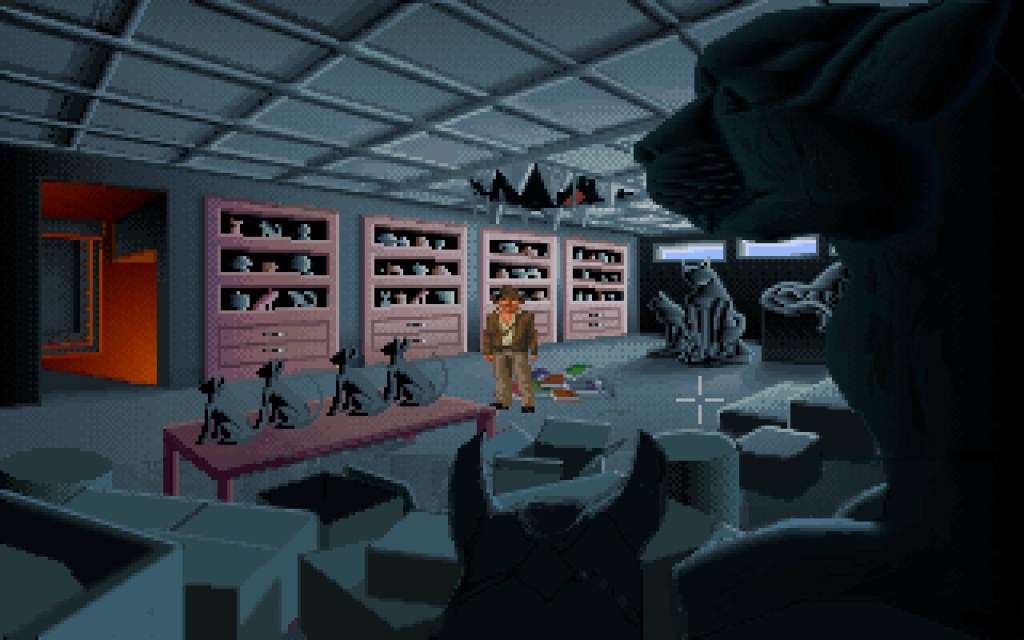
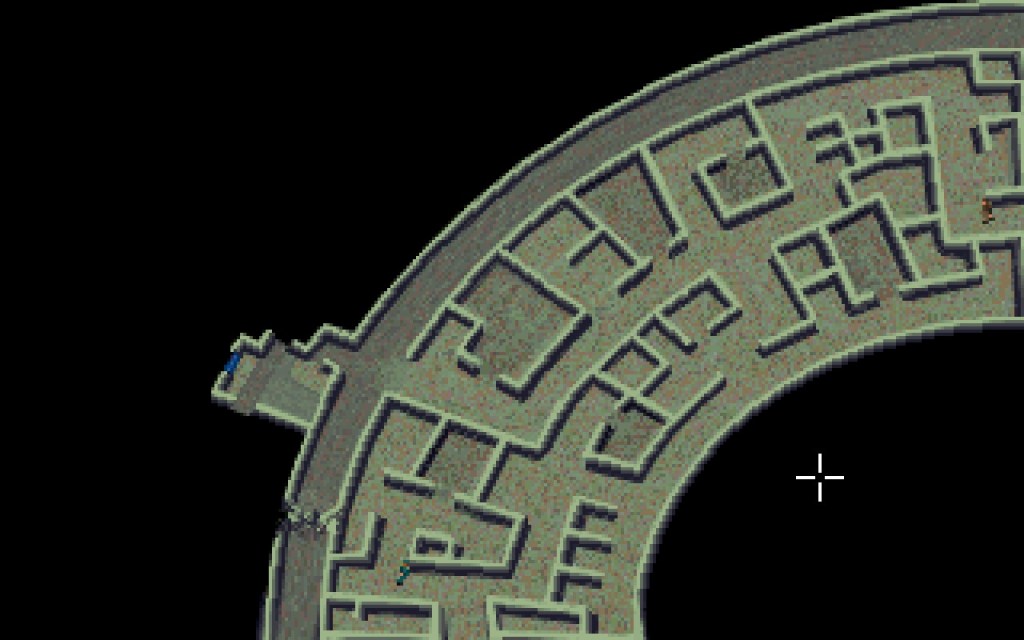
After a flurry of scrapped ideas including a rejected Chris Columbus script and an early idea involving Excalibur, Fate of Atlantis was released in 1992 and as a full ‘talkie’ CD-ROM in 1993. From the minds of Hal Barwood and Noah Falstein came a new, original Indiana Jones story which was well received and a commercial success, selling over a million copies. The story drew inspiration from a range of existing media including psuedo-science books from so-called true believers, cheapo coffee-table conversation starter books, Plato’s actual dialogues and the 1882 book Atlantis: The Antedulivan World. Hal Barwood was particularly taken by a diagram depicting Atlantis as three concentric circles, which helped shape the setting. Learning about the Atlantean metal alloy orichalcum added some further weight to the story and some fuel for competition with the Nazis. The source material led to the creation of the mythical text, Plato’s Lost Dialogue, Barwood and Falstein filled in the rest of the story. The lead artist in the team, William Eaken, designed Atlantean architecture and artifacts to be somewhat alien. The overall look draws inspiration from the Minoan civilisation and the Atlantean machines or artifacts present themselves as highly advanced, misunderstood technology and almost magic in nature.
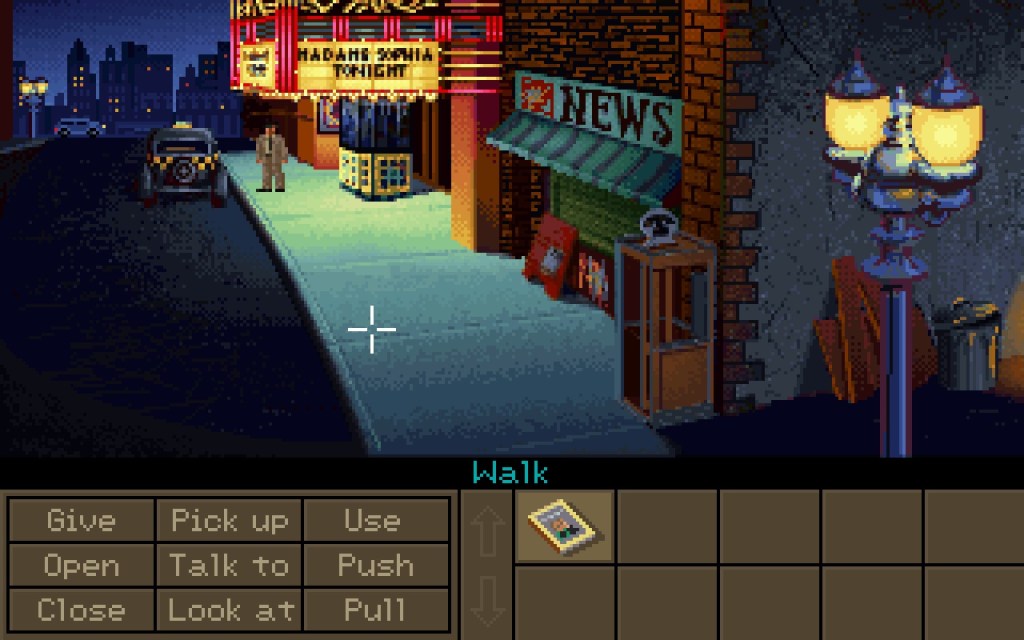
We join Indy on the eve of World War II as he searches Barnett College for a strange statue at the request of the mysterious Mr. Smith. After tracking the statue down in the college archives, Indy returns to his office where Smith and Marcus Brody await his return. Smith pulls a gun and steals the statue, its strange metal bead and makes a quick getaway. Smith is revealed to be Nazi agent Klaus Kerner, leaving behind his coat and a clue for where he may strike next: a magazine article about an expedition Indy worked on with now-psychic Sophia Hapgood. Now off to New York, Indy crashes one of Sophia’s performances to warn her and try to intercept Kerner. Back in her dressing room, they discover it has been turned over presumably by Kerner in search of Atlantean artifacts. We quickly learn their efforts were a swing and a miss as Sophia reveals her necklace which allows her to channel the spirit of Atlantean king Nur-Ab-Sal. The pair discover that Nazi scientist Dr. Hans Ubermann seeks the power of Atlantis as a power source for the Third Reich. Nur-Ab-Sal directs our heroes to find Plato’s Lost Dialogue which will guide them to Atlantis. After some professional sleuthing we discover the text is held at Barnett College, sending Indy back into the archives. With the Lost Dialogue recovered and the revelation that three stone discs are needed to enter Atlantis and its colonies, we’re presented with the game’s defining choice: Wits, Team or Fists.
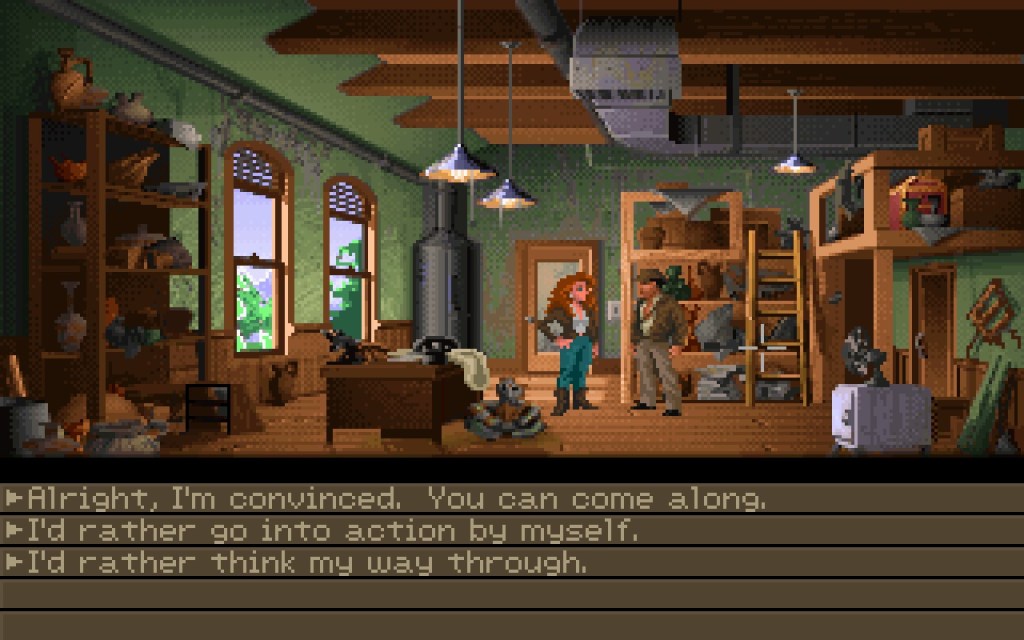
The game really starts when you choose your path, which at the time was fairly significant in a point-and-click adventure game as it hadn’t really been done before. We have Wits, which is Indy by himself solving more complex puzzles. Team, where Indy, obviously, teams up with Sophia Hapgood in the quest to find Atlantis. And finally Fists, which should be pretty self explanatory. Less thinky, more punchy. Fighting is still featured in the other two paths, but it can typically be avoided with a more complex solution. Each path offers a different way into the lost city. From what I understand, when Noah Falstein initially came up with the idea of the three path system, it added on an extra 6 months of development to allow for each path’s added puzzles, locations and dialogue. Small price to pay, to be honest.
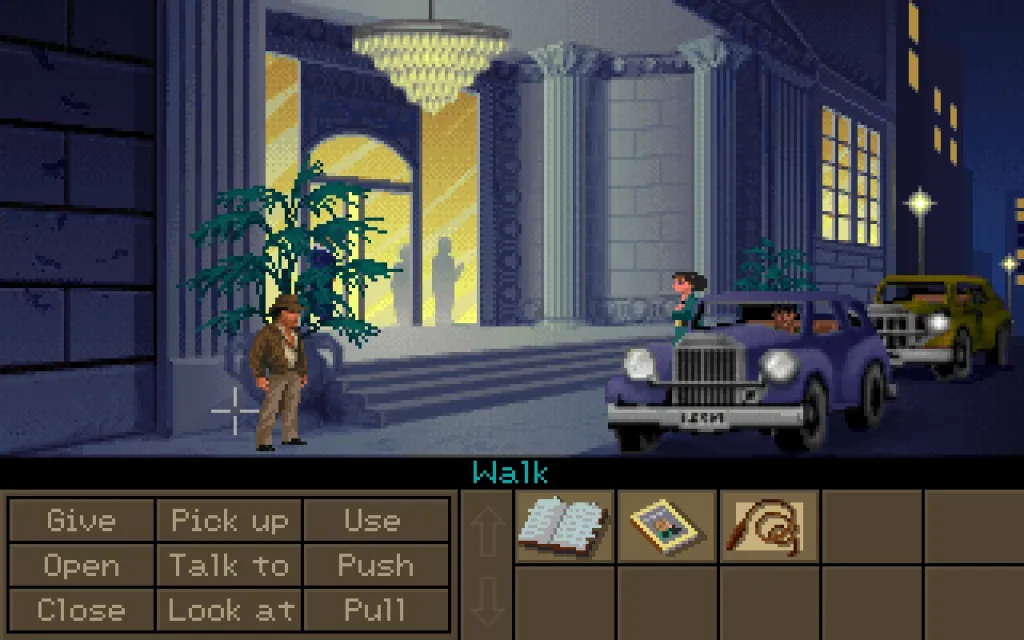
Indy, and Sophia if you’re playing the Team path, travel around the world to locations in Algiers, Crete, Monte Carlo and Thera to track down the three stone discs needed to uncover the secrets of Atlantis. Along the way, we visit Atlantis’ lesser colonies and long-forgotten Atlantean outposts. Each with their own puzzles, dangers and snippets of ancient history. There’s plenty of classic Indiana Jones encounters with dodgy antiquities dealers, colourful street vendors and more than a few moments of trouble through the desert. We encounter angry spirits, mysterious Atlantean technology and the ever-present threat of Nazi stooges. The whole game centers around the race against time to prevent the power of Atlantis from falling into the wrong hands.
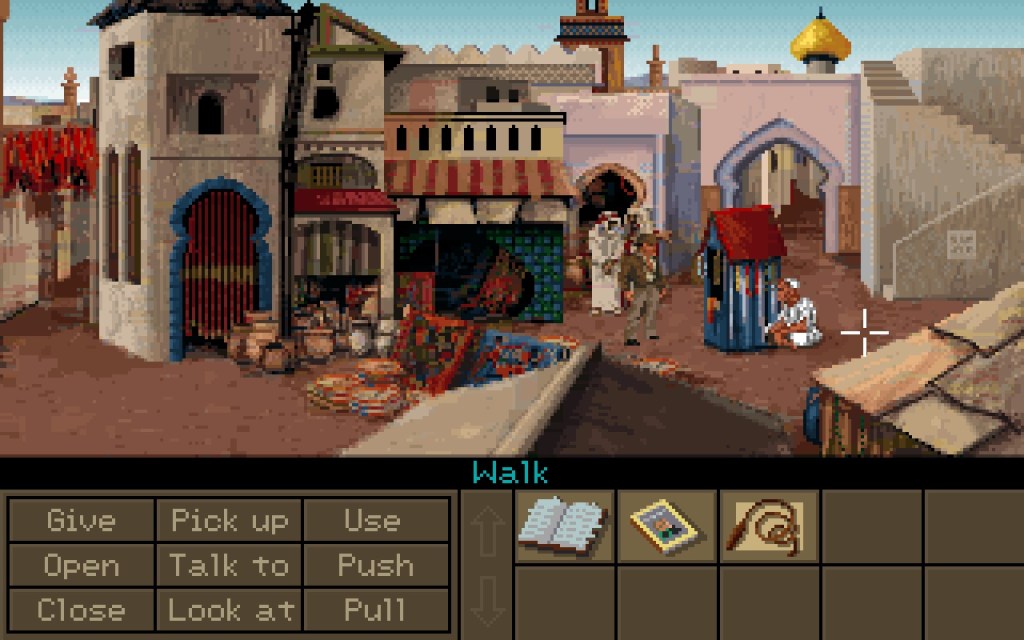
The pacing of the story is presented very well with a good balance of puzzles to snippets of the story unfolding. The music is simply fantastic throughout the entire game and the title sequence including the Indiana Jones theme always hits me HARD in the nostalgia. You can opt for either SoundBlaster/Ablib or emulated Roland/MIDI in ScummVM. SoundBlaster is more nostalgic for me, but lately I’ve been trying out the emulated Roland music and I have to admit, it actually sounds pretty great. Both are great. The game has some serious replayability, which is pretty rare for a game of this age and genre, as you can take either of the three paths and there are multiple ways to solve some puzzles. While the game is fairly linear, the puzzles and story remain incredibly engaging. The environments in the game look good. For whatever reason, the artistic team only gained access to scanning toward the end of development so only about 10% or so of the backgrounds are hand-drawn and scanned in and then completed from there. For a game that looks this good, especially for the time, it surprises me that the vast majority of the work was completed in Deluxe Paint.
Indiana Jones and the Fate of Atlantis is my pick for best classic point-and-click adventure game of all time. It is simply a standout in the adventure game genre. The story is well written and presents as the movie we should have had, but I’ll happily take it as a video game. I mean, I really don’t hate Kingdom of the Crystal Skull, but if there was an Indiana Jones story worthy of a movie this was it. But, much like another LucasArts movie not-to-be The Dig, Fate of Atlantis benefits greatly from the user directly interacting with environment and solving puzzles to unfold the story. The puzzles are well crafted, environments are legitimately interesting and look fantastic. The music is phenomenal and only adds to the overall experience, it perfectly complements the atmosphere and story. The three path system gives you the option to not only choose your journey to Atlantis, but to return and choose again. Make a paths save. Do it. Each path offers a fresh perspective on the game’s story. Despite being a fairly linear LucasArts adventure game style, the variety in problem solving and story progression ensures that Indiana Jones and the Fate of Atlantis cements itself among the great adventure games of all time.
Verdict:
Indiana Jones and the Fate of Atlantis stands as one of the best classic adventure games. It blends an original, captivating story with well thought out puzzles, a rich and thoroughly researched environment with fitting, well constructed music. It offers strong replayability with its three-path system. Truly, it delivers an experience that rivals any Indiana Jones film and earns it’s place as a timeless standout in the adventure game genre.
Deck Compatibility: 10/10
Overall Game Rating: 10/10


 Dad with a Deck
Leave a comment