
Myst has been one of those games I’ve known about for what seems like forever, but never had a crack at. Well, January for the Dusty Game Society1 finally changed that for me and I’m pretty glad it’s now firmly in the finished column. I’ve always heard Myst is one of the broader gaming community’s most influential titles and there’s something oddly satisfying about finally ticking it off the list and realising it actually lives up to the hype. Along with Killer Frequency, which is a banger game that I suggest you check out, realMyst helped fill that Firewatch void that continues to linger for me. There’s something about being dropped into an environment where you’re encouraged to wander around and take in your surroundings without following a clearly defined path. It nearly feels like an act of rebellion against the modern design trend of constant guidance and hand holding. Exploration is the main mechanic, but without a gratuitous open world that’s constantly thrust upon us with every new release. Call me old school, I guess, but it’s nice to have a richly detailed, finite world to explore.
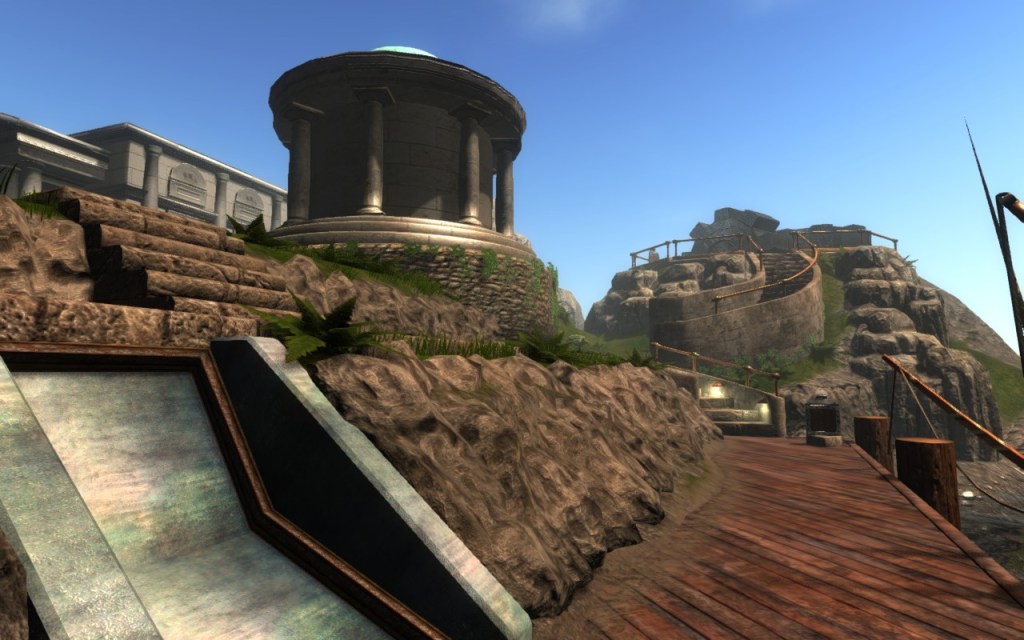
realMyst was originally released in 2000 by Cyan Worlds, with the further enhanced Masterpiece Edition arriving on Steam in 2014. Now, before I kick off with the story: the original Myst came out in 1993, don’t blame me if I spoil it for you. The story follows an unnamed protagonist who discovers a mysterious book titled “Myst”, which describes an island world in vivid detail. Placing your hand on the final page transports you to this strange and seemingly abandoned island, really leaving you little choice but to explore. In the library, you come across two books, one red and one blue. These books are actually traps which have imprisoned Sirrus and Achenar, the sons of the island’s creator, Atrus. Both claim their father is dead, each blaming the other for the destruction of their family and they beg for their freedom by asking you to recover their respective missing pages. Naturally, the brothers also warn you not to touch a mysterious green book, insisting it’s just another trap. We discover that the green book actually contains their father, Atrus, who is very much alive. I won’t spoil it entirely, but I think the game definitely rewards a healthy level of skepticism. Your choices will ultimately determine the ending and whether you doom yourself or bring a bit of order back to Myst.
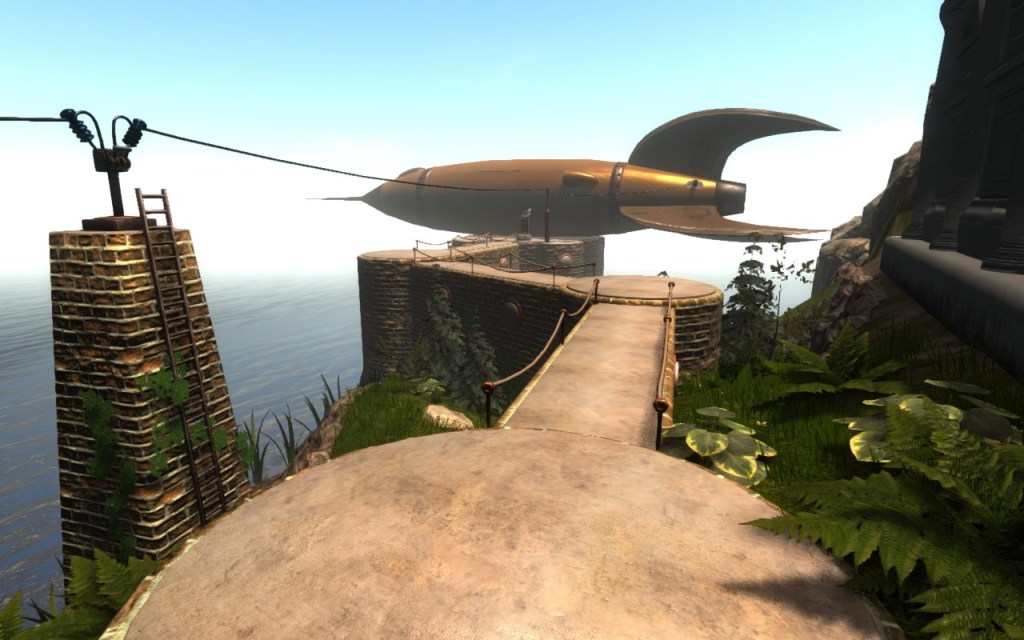
One of the first things you’ll notice about realMyst is that it looks and feels impressive. The original is great, but those fully 3D environments are fantastic to wander around in and I found it genuinely fun to just take my time and soak in the atmosphere. Myst has this incredibly eerie feel about it from the moment you arrive on the island and the creepy undertones are to be expected when you’re the only one in the environment. It’s the kind of game you can find yourself getting lost in, even if it’s not a massive open world. You arrive with very little context or direction, which isn’t something I usually enjoy. The further you progress through the game, you realise that the initial confusion is absolutely intentional and it totally works in the game’s favour. Discovery and exploration become key elements and actually feel really rewarding. It was refreshing not being handed objectives or markers like we are in most modern games. Instead, Myst expects you to figure things out for yourself and placing that level of trust in the player is incredibly satisfying.
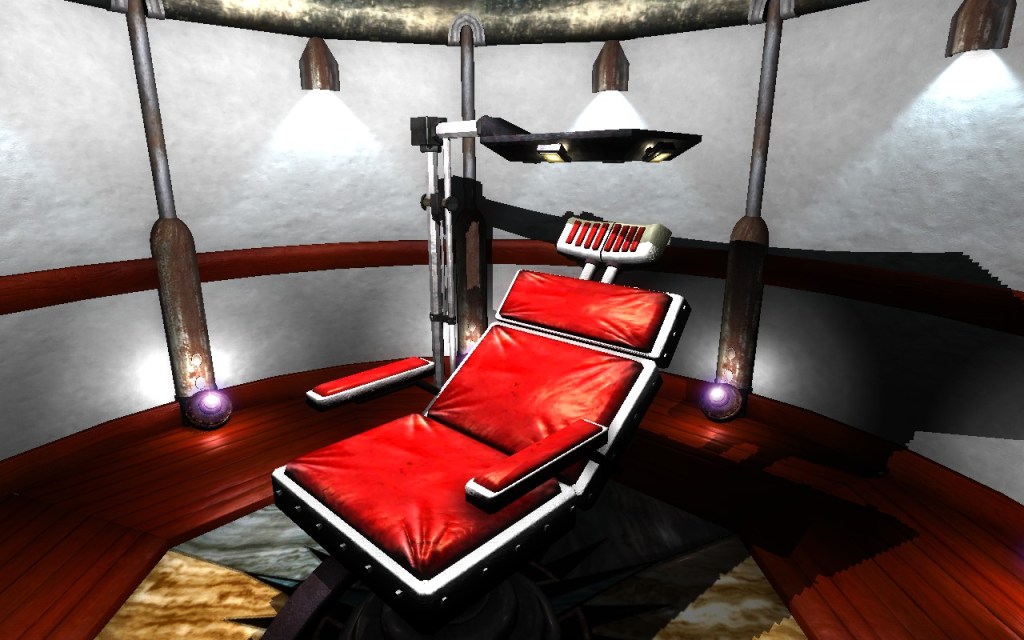
It’s hard not to mention the puzzles, being that Myst is ultimately a puzzle game. Some are really clever, some are frustrating as all hell and others might just stop you in that old school way where you have to step away to think and come back later. You could always just pull up a guide, I sure as hell won’t judge you. Overall the puzzles feel fair and there are usually some clues scattered throughout the world to help you get the right answer. When it all finally clicks, Myst delivers a genuinely satisfying payoff and the game subtly encourages you to keep pushing forward to uncover more pieces of the story. Well, either that or it makes you stubborn to the point that you refuse to let a game beat you. The puzzles are strong, but the real draw is in exploration. There is no hand holding and no objectives guiding you forward. You’re simply dropped into the world and left to work out how each piece fits together and how you go about slotting them in. It feels absolutely deliberate and thoughtfully designed at every step, which makes for a very refreshing experience.
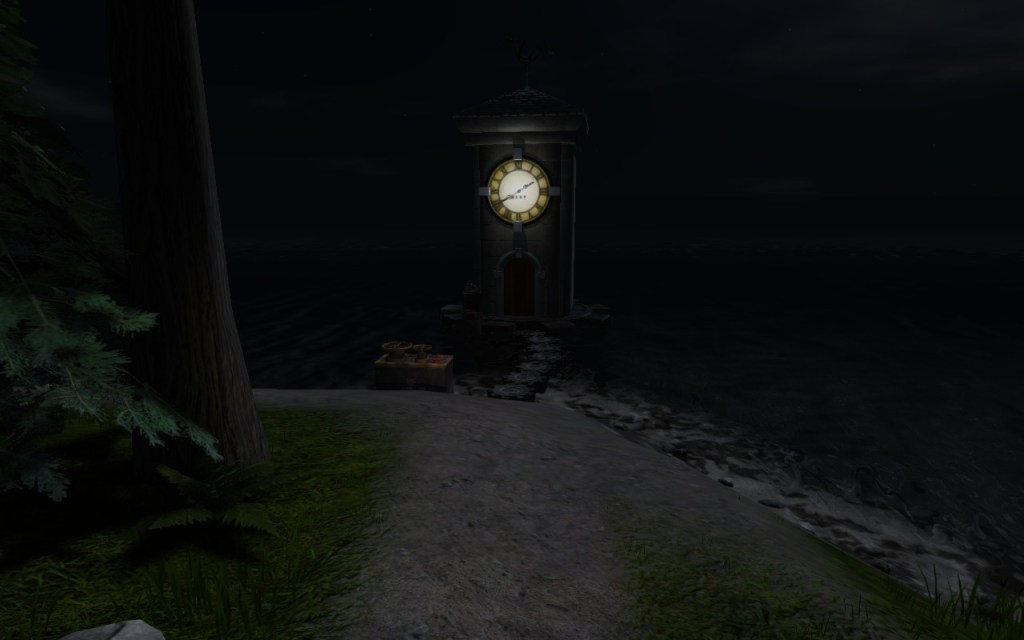
Despite never playing the original release… or realMyst when it first came out… or even realMyst: Masterpiece Edition at launch, I have to imagine it holds up with how much I enjoyed it in 2026. I don’t usually go for games that drop you in without any backstory or objectives. There’s no quest markers or hint systems to nudge you in the right direction and no dramatic scenes every twenty minutes to push the story along. It really asks for your patience and a willingness to just, uh… exist in the world for a while. That design philosophy might seem old, but from a pure experience standpoint it really works because it respects your time in a different way. It doesn’t demand quick reflexes or long, gruelling sessions to make progress. You can safely pick it up, explore the world, solve some puzzles (or fail spectacularly) and put it down without feeling like you’ve broken the flow of the game. It feels more thoughtful than frantic. Replayability definitely helps too, encouraging you to revisit the world and make some different choices… or just tick off some achievements. Going back in with more knowledge and a bit more suspicion can give the whole experience a different flavour. It won’t be for everyone, but if you’re happy to slow things down, take some notes and follow your curiosity, Myst still works. It feels quietly confident in what it is.
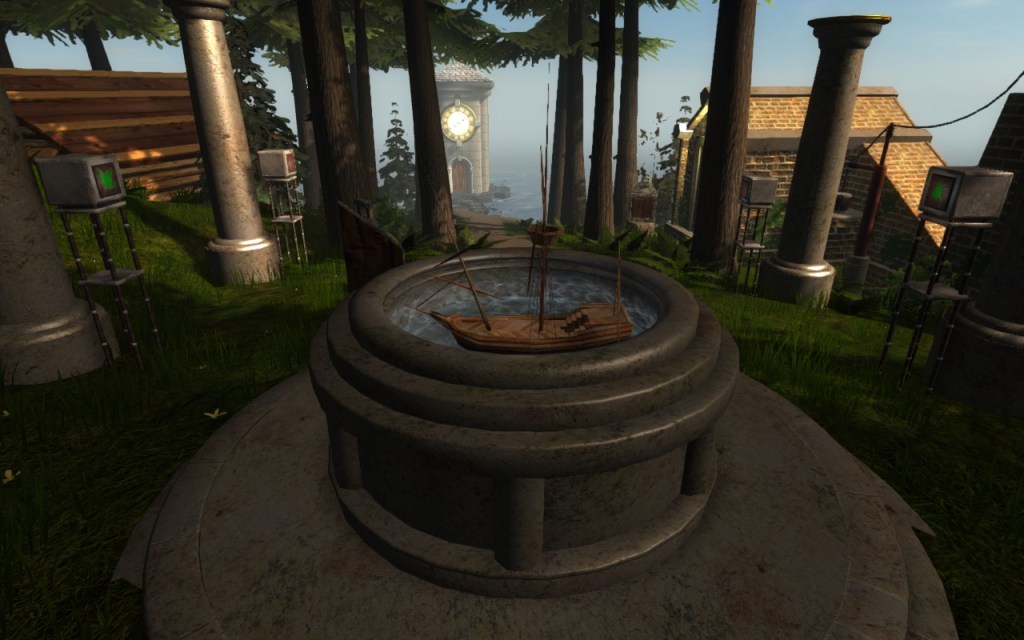
I’m genuinely glad I finally gave Myst the time of day it probably deserved years ago. realMyst was a banger choice and I think its the more immersive version of the Masterpiece Editions. It looks amazing and handles great on the Steam Deck. It really feels like one of those landmark games that could have easily been an overhyped relic, yet it quietly earns its reputation through smart design choices and confidence in its own world. I really enjoyed wandering the island at my own pace and scratching my head over puzzles, slowly piecing everything together without feeling rushed. There’s something satisfying about a game that trusts you to pay attention and rewards you for doing so, especially if you approach it with a healthy dose of suspicion. It’s not flashy and won’t compete with modern AAA games, but it doesn’t need to. Myst knows exactly what it is and fully leans into it. For me, it was a thoughtful and absorbing experience that felt built for shorter sessions and really left me feeling like my time was well spent. And that’s about as high a compliment as I can give these days.
Verdict:
Myst surprised me in a good way. It’s slow, quiet and more demanding of the player than a lot of modern games. It rewards patience and curiosity, swapping hand holding for head scratching and exploration. If you’re willing to slow down and engage with it on its terms, there’s something special here.
Deck Compatibility: 10/10
Overall Game Rating: 8/10 – What A Journey
- What is the Dusty Game Society?
The Dusty Game Society is a gaming club where community members come together from across the internet and play a select retro game each month. If you’re a fan of TechDweeb, you’ll know what I’m talking about. If not, check him out on Youtube or visit his Patreon to find out more. ↩︎




 Dad with a Deck
Leave a comment